AI-Powered Hyper-Personalized Campaigns
Karl Marais | 13 May 2026
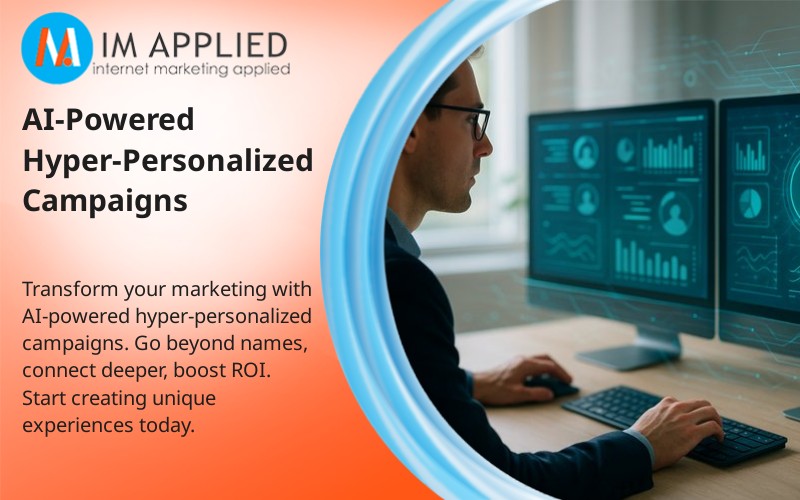
Running marketing campaigns can sometimes feel like shouting into a void. You likely personalize already, but are you really building a connection?
Basic personalization, like addressing a customer by name, is often no longer enough to stand out in crowded digital spaces.
Consumers expect more relevant and timely experiences. AI-powered hyper-personalization is becoming increasingly important for businesses looking to strengthen customer engagement, build loyalty, and improve marketing performance.
What is AI-Powered Hyper-Personalization?
AI-powered hyper-personalization changes how businesses approach customer engagement by enabling more individualized marketing experiences.
Unlike traditional tactics, hyper-personalization uses real-time data and AI to address each customer’s needs and preferences as they evolve.
This approach goes beyond segmenting by age or location. By incorporating behavioral data, transaction history, and even external factors like weather, machine learning algorithms analyze and continuously adapt based on customer interactions.
This helps businesses deliver more personalized communications, helping improve conversion rates and customer loyalty.
Using AI and predictive analytics, businesses anticipate what customers might want next, responding instantly with offers, content, or recommendations that make every touchpoint more relevant and engaging.
Definition and Core Concepts
At its core, hyper-personalization is about tailored experiences. AI and machine learning processes vast datasets, using detailed behavioral data to dynamically adapt and respond to each customer interaction.
Unlike static segmentation, this strategy enables brands to deliver smoother experiences that align with each customer’s journey.
These analytics help marketers predict future preferences and behaviors and improve campaign performance.
Traditional Personalization vs. AI-Driven Approaches
Traditional personalization often means using static segments or addressing the customer by name, methods that don’t change as behaviors do.
By contrast, AI-driven approaches enable dynamic, real-time personalization that evolves with the customer.
Rather than relying solely on historical data, these systems predict needs using real-time data and behavioral triggers, transforming interactions from reactive to proactive. Companies that embrace this shift see improved customer satisfaction and stronger business outcomes.
Learn more about AI-driven personalization here.
Why Hyper-Personalization Matters in Modern Marketing
Hyper-personalization is becoming a necessity. Customers want relevance in every interaction, and delivering it pays off.
The deeper you understand and anticipate customer behavior, the more likely your campaigns will engage, convert, and inspire loyalty.
More tailored campaigns can also improve ROI through stronger audience engagement, higher conversion rates, and stronger brand loyalty.
Companies investing in advanced personalization strategies may see improvements in revenue and customer retention.
Enhancing Customer Experience and Conversion Rates
AI-driven hyper-personalization improves customer experiences. By predicting customer needs, businesses deliver more relevant offers and recommendations, raising satisfaction and increasing purchases. Customized product suggestions and targeted emails are proven ways to bolster conversion rates.
B2B and B2C: Universal Benefits
Whether it’s in B2B or B2C, hyper-personalization matters. B2B clients want communications tailored to their unique situations, be it in finance, healthcare, or another sector.
B2C customers can expect their preferences and past behaviors to be recognized and acted upon.
Across industries, the ability to deliver unique journeys increases engagement and drives results. For healthcare and finance, this level of personalization is especially critical, building trust and deeper relationships.
The Role of Data in AI Hyper-Personalization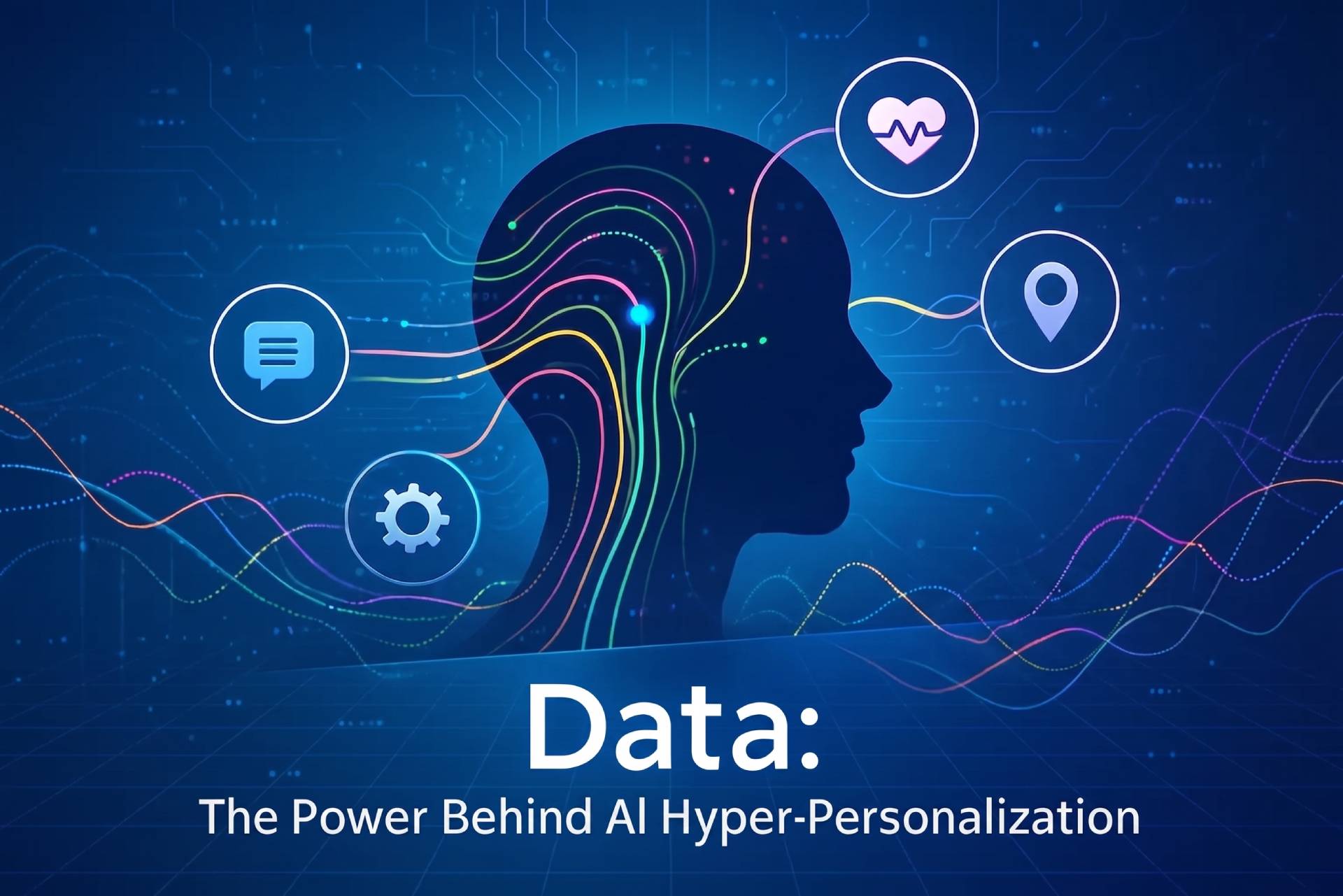
Data is the backbone of successful hyper-personalization. Modern consumers expect interactions that reflect their preferences in real time, and achieving this depends on the ability to capture, organize, and analyze detailed customer information.
Tools such as CRM systems and customer data platforms (CDPs) help unify data from various sources, providing a more comprehensive view of each customer.
This data-driven foundation helps businesses identify useful patterns in customer behavior, powering marketing campaigns that deliver exceptional, personalized experiences.
To see how AI shapes data strategy, check out this guide to integrating AI with data decision-making.
How AI Fuels Hyper-Personalized Campaigns
AI and machine learning are transforming marketing with their ability to process enormous data sets and predict what customers want next.
From large language models (LLMs) to deep learning, these technologies make it possible to create hyper-targeted, effective marketing campaigns.
AI adapts to each customer’s journey. With predictive analytics and real-time data, businesses provide recommendations that connect with consumers, helping marketers create more targeted campaigns.
Implementing AI-Powered Personalization: Strategies
Success with hyper-personalization starts with a clear personalization strategy. This means more than just using names in emails.
It’s about building a structured plan, leveraging automation, and creating more personalized experiences across customer touchpoints.
AI-powered tools consistently analyze customer data, helping businesses better understand customer behavior and refine campaigns.
These insights enable marketing that resembles an ongoing conversation, rather than a one-way pitch, fostering trust and loyalty.
Creating a Unified Customer Profile
A unified customer profile is important for effective personalization. This involves gathering and integrating data from multiple platforms to build a more connected view of each customer.
Customer journey mapping can then help businesses better understand customer interactions, revealing behavioral patterns and opportunities for more tailored engagement.
Segmentation and Dynamic Content
Dynamic segmentation divides customers into responsive groups based on real-time behavior.
AI-driven workflows deliver precise messaging, so content adapts quickly to customer actions. This real-time adaptation increases engagement and improves conversion rates.
Testing and Optimization
Constant testing and optimization are essential for campaign success. A/B testing and ongoing reviews help pinpoint what resonates most, allowing marketers to refine strategies for better results.
Regular testing and refinement are important for improving campaign performance over time. Ongoing testing and adjustments based on real customer data can help marketers refine their strategies.
Overcoming AI Hyper-Personalization Challenges
While hyper-personalization unlocks value, it must be balanced with data privacy and ethical responsibility. Customers expect transparency and control over their data.
Marketers should ensure compliance with regulations like GDPR and CCPA, and offer clear consent options.
Trust also depends on handling data responsibly. Use first-party data relationships, where customers know how their information will be used, to build confidence. Ethical guidelines help reduce the risk of overreach and ensure AI is an asset, not a liability.
Future Trends in Hyper-Personalization
Personalized marketing is evolving quickly. Advancements like IoT, augmented reality, virtual reality, and blockchain are creating richer, more tailored experiences.
AI agents now autonomously manage campaigns, and AI systems continue to improve.
Businesses are moving toward more individualized customer experiences, and marketers must continuously adapt to new possibilities. To stay ahead, explore AI tools that predict customer behavior.
Measuring the Success of Hyper-Personalized Campaigns
Accurately measuring campaigns is important to gauge effectiveness and improve ROI. Key metrics include engagement and conversion rates, click-through rates, and customer lifetime value (CLV). Monitoring pipeline velocity also helps evaluate how efficiently leads convert to sales.
Analyzing ROI and Customer Loyalty
Assessing the impact on ROI and customer loyalty helps businesses evaluate the effectiveness of AI-driven personalization efforts.
Metrics such as revenue lift, retention rates, and customer satisfaction (CSAT) can provide useful insight into campaign performance.
Strong campaign performance may also contribute to repeat business and lower churn over time, supporting longer-term growth.
Conclusion
AI-powered hyper-personalization can give businesses an edge by helping them create more relevant customer experiences and improve marketing performance.
By learning from customer data over time, marketers can refine campaigns, build stronger customer relationships, and deliver more meaningful interactions.
AI-driven personalization strategies help businesses communicate more effectively, improve engagement, and strengthen brand loyalty.
When backed by accurate data, these approaches can make marketing more relevant to audiences while helping businesses remain competitive.
To get started, businesses should focus on building a solid data foundation, choosing the right tools, and developing the skills needed to use AI effectively. Human creativity still plays an important role in shaping campaigns that connect with audiences.
As customer expectations continue to change, businesses that combine responsible data use with AI-driven personalization may be better positioned to create more relevant customer experiences, strengthen engagement, and adapt to changing customer needs.