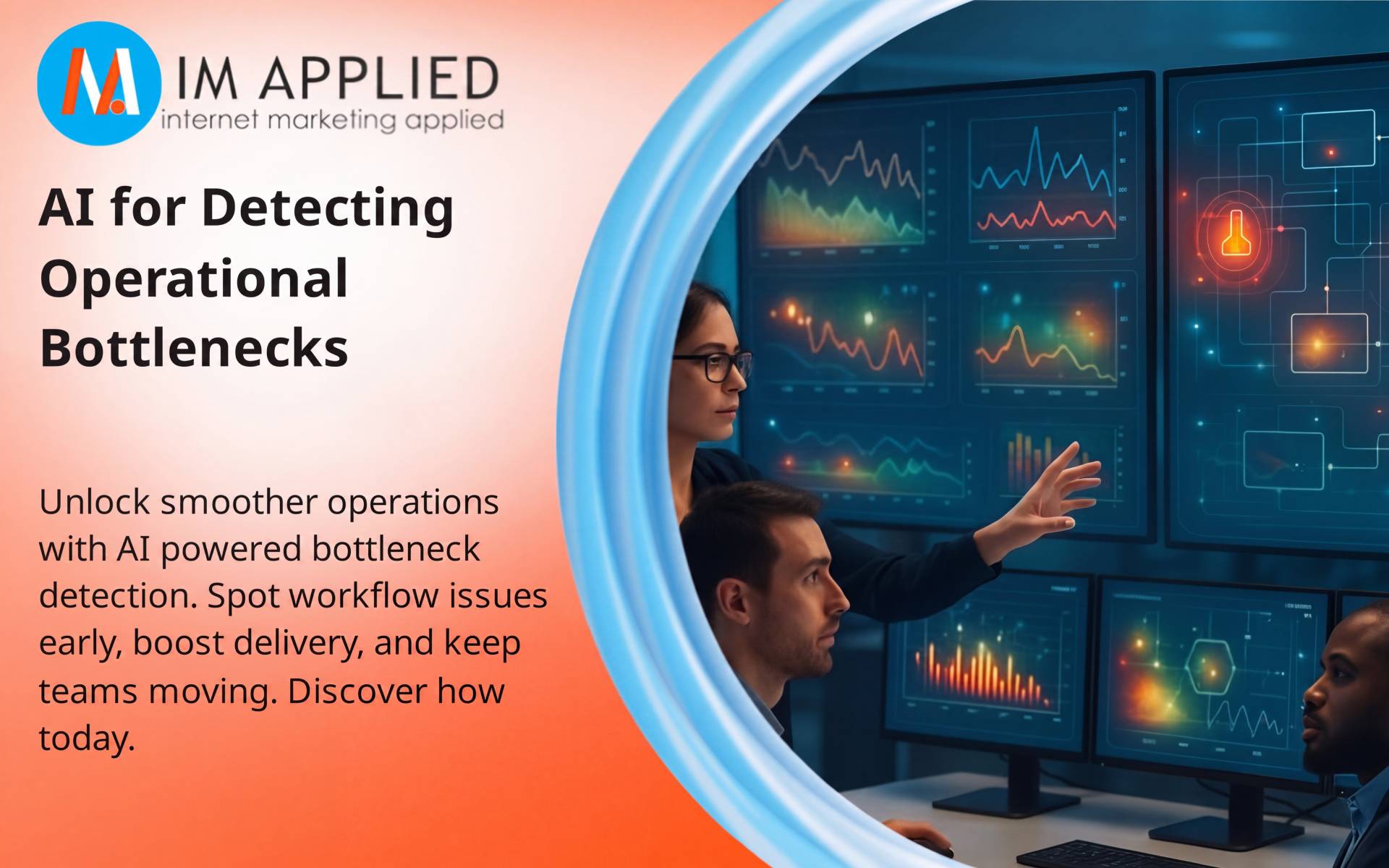
AI for Detecting Operational Bottlenecks
Karl Marais | 17 April 2026
Most organizations don’t struggle due to a lack of effort; they struggle because critical work slows in areas that aren’t immediately visible.
Teams remain busy, dashboards display activity, but delivery feels inconsistent. This usually comes down to bottlenecks.
Spotting these bottlenecks usually relies on human observation. Managers reviewing reports, Scrum Masters running retrospectives, and leaders leaning on intuition.
By the time a bottleneck is found, it’s already delayed outcomes. AI changes this by continuously monitoring workflow and highlighting friction before it causes damage, supporting your team.
Understanding Operational Bottlenecks in Modern Industries
Operational bottlenecks are major constraints in business processes, causing delays and stalling productivity.
These arise when certain phases can’t keep pace with demand, restricting output and hindering growth. Recognizing these constraints is vital for overcoming process slowdowns and improving overall productivity.
Bottlenecks often appear as workflow inefficiencies. For example, when a single manufacturing step can’t keep up, work piles up, reducing throughput and impacting revenue.
These slowdowns can be subtle: delays, productivity drops, or unexplained backlogs. Addressing them effectively is best supported by a data-driven approach, using tools like AI to spot and resolve issues early, before they escalate.
By leveraging AI, companies can move from reacting to problems to proactively managing them, ensuring high productivity and continuous improvement.
The Role of AI in Bottleneck Detection
AI significantly improves bottleneck detection by providing precise, actionable insights from vast data, beyond what is typically possible through human observation alone.
Through AI-powered analysis, organizations gain real-time awareness and predictive capabilities, critical for sustainable operational efficiency.
AI’s real strength is continuous monitoring, constantly collecting and analyzing data, and pinpointing friction early. This enables organizations to tackle inefficiencies sooner.
By bringing together data from multiple sources, AI uncovers hidden patterns and anomalies, empowering teams to resolve issues before they affect productivity. This approach is helpful for resilient, consistently performing operations.
Advantages of AI Over Traditional Methods
Compared to traditional methods, AI excels in bottleneck detection thanks to its speed and depth.
Traditional approaches rely on lagging indicators, noticing problems only after the fact. AI, in contrast, can deliver real-time visibility, turning fragmented operational views into a unified, evolving picture.
AI’s ability to analyze patterns at scale means inefficiencies are found earlier and more reliably. This continuous optimization increases overall business agility.
By facilitating early interventions, AI helps minimize operational setbacks and ensure workflows stay efficient. For more on integrating AI into business strategy, read more here.
Key AI Techniques: Process Mining and Predictive Analytics
Process mining and predictive analytics are commonly used AI methods in bottleneck detection.
Process mining analyzes event logs to generate accurate process maps, highlighting inefficiencies such as excessive cycle times or queue buildups.
Predictive analytics goes further by forecasting where bottlenecks may develop, and digital twins can be used to simulate workflows and test improvements.
Both techniques support systematic identification and resolution of constraints, offering clear workflow visualization and diagnostic precision. Read more about predictive analytics for marketing here.
Machine Learning in Bottleneck Detection
Machine learning, through supervised and unsupervised learning, finds hidden patterns in complex operational data. These insights predict potential delays and habitual issues, enabling organizations to deal with them before they disrupt workflows.
The adaptability of machine learning helps to ensure ongoing relevance as operations evolve, improving consistency and efficiency over time.
Implementing AI Solutions for Bottleneck Detection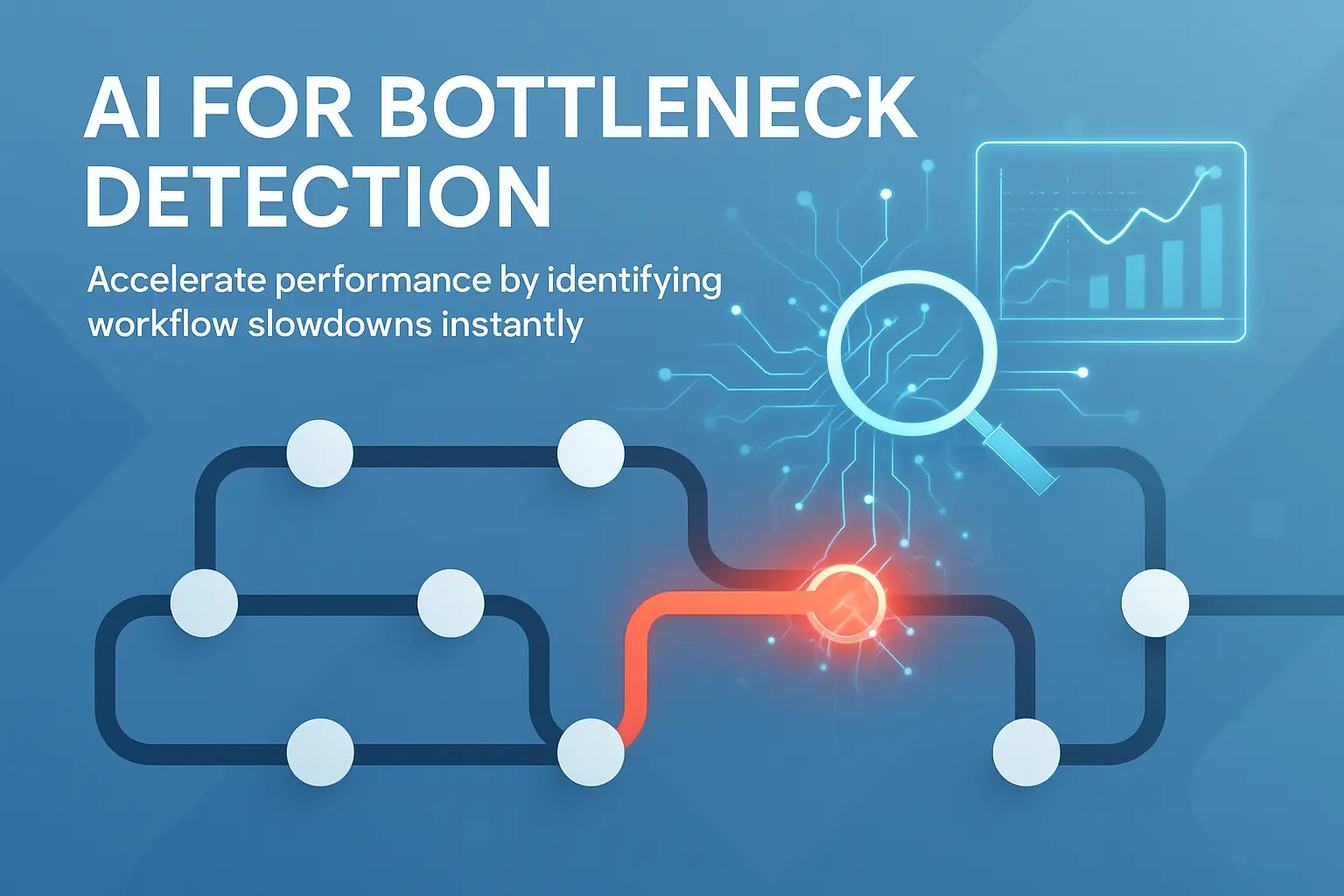
Integrating AI for bottleneck detection can give organizations an advantage by highlighting friction points before they cause major issues.
AI tools act as vigilant observers, delivering instant analytics and reducing the risks associated with hidden process delays.
The first step is adopting an AI platform capable of effective data ingestion and deployment. It supports broader process optimization at the enterprise level, complementing human decision-making with data-driven insights.
How to Integrate AI in Workflows
Begin by selecting processes with frequent delays or inefficiencies for AI optimization. Next, collect and clean event logs; data accuracy is crucial. Once clean data is ready, import it into an AI tool to generate detailed process maps.
Configure real-time monitoring and alerts so teams are notified of emerging bottlenecks, promoting early intervention.
Ongoing updates to your AI system help it remain effective amid operational or market changes, securing long-term improvement and a positive return on investment.
Essential Features of Effective AI Tools
A robust AI tool for bottleneck detection offers:
- Real-time monitoring for instant insight
- Integration with existing enterprise systems
- Visual dashboards for a quick grasp of complex processes
- Root-cause analysis to identify not just problems, but their origins
- Scalability and automation for growing businesses
- Customizable reporting and alerts
Choosing tools with these features, such as Celonis, UiPath Process Mining, or SAP Signavio, equips organizations to streamline workflows and foster long-term growth.
Overcoming Challenges in AI Bottleneck Detection
Implementing AI has challenges: integrating with legacy systems, managing implementation complexity, and supporting change management.
Alignment with stakeholders and clear communication help ease transition and support AI’s adoption and effectiveness. Learn more about how to solve bottlenecks using AI here.
Real-World Applications and Case Studies

Industries from manufacturing to healthcare and IT use AI to help resolve bottlenecks and streamline operations. For instance, hospitals employ AI to monitor patient flow, identifying and reducing delays in care.
Manufacturers use AI-driven IoT data to predict and reduce the risk of breakdowns before downtime occurs. In IT and software, AI tools analyze workflows, flagging process or code review delays, thus keeping projects moving efficiently.
Best Practices for Optimizing AI Bottleneck Detection
To maximize AI’s impact:
- Prioritize continuous monitoring and real-time alerts for faster response to workflow deviations.
- Maintain regular training and updates of AI models to keep predictions accurate and processes efficient.
- Implement a robust feedback loop, using insights for ongoing improvement, keeping the organization’s operations aligned and competitive.
Conclusion
AI is increasingly important for operational efficiency, helping organizations identify and address bottlenecks before they stall progress.
By harnessing real-time, data-driven insights, businesses not only improve process flow but can also strengthen their competitive position in today’s market.
Successful AI integration isn’t only about new technology but also about building a culture that embraces data and ongoing improvement, contributing to sustained growth and efficiency.
The Future of AI in Operational Efficiency
Looking ahead, AI is expected to play an increasing role in continuous process improvement and support more informed decision-making.
Intelligent agents are likely to become valuable process copilots, helping companies reduce downtime and optimize resources as market conditions evolve.
Preparing Your Business for AI Integration
Start by setting clear objectives and cultivating a data-driven culture. Track operational flow metrics to measure productivity gains, align AI implementation with business goals, and focus on integrations that empower your team.
With continuous learning and adaptation, AI can become a powerful ally, helping you deliver streamlined, efficient, and innovative operations. Learn how to scale with AI for lasting success.