AI Real-Time Marketing for Faster Reactions
Karl Marais | 8 July 2026
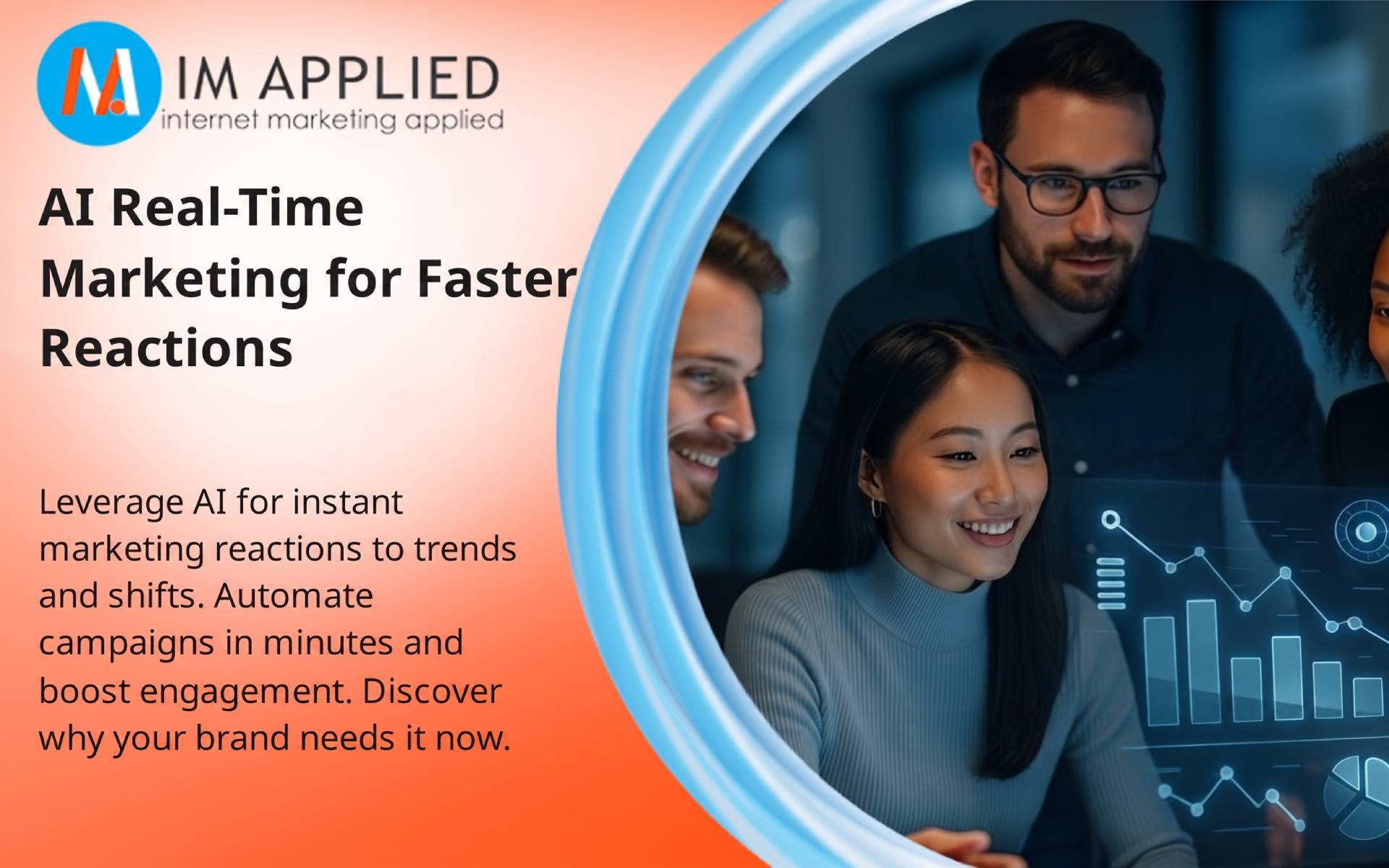
Attention is cash. Right now, your prospects are reacting to live trends, cultural moments, and sudden market shifts. You have an opportunity to harness this wave of attention instantly, driving engagement and sales.
But trying to write, approve, and push marketing messages manually is a losing battle. By the time your team signs off on a creative brief, the conversation has likely moved on, leaving your brand looking late and out of touch.
Real-time marketing success comes from installing an AI-powered reflex through technology that listens to live signals, tests your message on synthetic audiences, and helps launch timely campaigns in minutes. Here’s why this matters, and why your business can’t afford to ignore it.
Understanding AI in Real-Time Marketing
Artificial intelligence is rapidly changing marketing, making it easier than ever for brands to connect with audiences amid cultural shifts.
This AI-driven real-time marketing transforms live signals into impactful campaigns, like an automated reflex for brand activation while competitors lag behind.
Through real-time consumer insights, AI helps brands monitor audience behaviour and respond more quickly.
Tools driven by AI and machine learning provide audience intelligence, helping businesses spot timely opportunities and respond with relevant messaging.
Definition and Core Concepts
Real-time AI marketing combines continuous data ingestion, live content engines, and multi-agent systems to tailor dynamic campaigns.
Natural language processing (NLP) helps interpret audience signals and tailor messaging, while machine learning sifts through large data sets to inform campaign decisions.
This results in personalized messages delivered at scale, so your brand stays relevant in a fast-moving market.
Importance of Real-Time Responses in Marketing
Speed matters more than ever. Cultural moments fade quickly, and brands that respond quickly and thoughtfully are better positioned to capture attention and engagement. Real-time marketing cycles allow you to lead conversations, not follow them.
With live data and AI, brands can ride the crest of breaking events and create content when it is most relevant. Proactive responsiveness means your brand captures opportunities while your competitors are still planning their response.
How AI Supports Real-Time Marketing
AI has redefined what’s possible in real-time marketing by combining speed with precision. AI-driven automation turns campaigns from static events into more dynamic and responsive flows.
As a result, marketers can continually optimize content, leveraging live customer data to meet real-time needs and instantly refine campaigns across channels.
Consider AI-powered orchestration. Not just collecting data, but deploying the right message at the perfect moment. AI parses massive data streams, surfacing opportunities your team might not spot in time.
AI-driven social listening and predictive analysis move you from simply reacting to actively anticipating market shifts.
Key Benefits of AI Real-Time Marketing
There are more benefits to AI-driven real-time marketing than speed. Some advantages include:
- Efficiency: AI tools continuously adapt and optimize campaigns, stretching your marketing budget further.
- Competitive Edge: React faster than competitors by using live data for real-time decision-making.
- Data-Driven Innovation: Enhanced data analysis refines strategies, turning insights into strategic actions that deliver measurable engagement and revenue growth.
Enhancing Customer Engagement
AI enables brands to create more profound, personal connections with customers, driving brand loyalty through highly relevant experiences.
With real-time audience engagement, brands can instantly respond to micro-reactions and shape their narratives in the moment.
AI-powered segmentation facilitates personalized marketing at every touchpoint, with continuous data analysis refining interactions over time.
This can lead to stronger engagement, better customer experiences, and improved long-term loyalty.
Increasing Conversion Rates
AI optimizes conversion rates by identifying high-performing campaign elements and focusing resources where they count.
Real-time insights from machine learning surface what resonates with audiences, which can improve conversion rates and reduce customer acquisition costs.
The incremental performance lift from continuously refined messaging means more sales and sustainable business growth.
Improving Brand Responsiveness
AI allows brands to launch on-message, timely content that aligns with current events and customer expectations.
This not only improves agility but also enables rapid competitor analysis and content deployment, ensuring your brand is always culturally relevant and ahead of the curve.
Implementing AI Real-Time Marketing Solutions
To adopt real-time AI marketing, businesses can leverage tools like AI decisioning suites and modern marketing automation platforms.
These automate workflows and integrate with your tech stack, enabling marketing teams to adapt instantly and efficiently.
A robust AI platform offers lean operations and seamless integration, serving as the foundation for personalized, automated engagement throughout the customer journey. The right integration ensures stronger, more data-driven campaigns.
Necessary Technologies and Tools
Today’s AI marketing tools operate as real-time solutions, adapting content on the fly and responding to audience signals instantly. Look for platforms with multi-agent orchestration, and live customer data integration. These technologies streamline processes and maximize the impact of each campaign.
Integrating AI with Existing Marketing Platforms
Effective AI adoption means thoughtful CRM integration, smart API connections, and workflow compression. Focus on omnichannel orchestration to harmonize messaging across every channel, using cross-platform insights to refine your strategies and maximize ROI.
Overcoming Common Implementation Challenges
The transition to AI marketing isn’t without hurdles. Addressing content chaos and workflow bottlenecks through automation is crucial. Prepare data pipelines and resolve compatibility issues early to ensure a smooth rollout.
Advanced Strategies for Faster Reactions in Marketing

Today’s marketing leaders employ fast-reaction strategies powered by AI, optimizing campaigns continuously, reacting instantly to market cues, and bypassing manual bottlenecks.
Automated campaign execution means your brand acts within moments, not hours, ensuring messaging stays urgent, relevant, and effective.
By leveraging automated data cues and live market signals, your campaigns remain agile, anticipating changes rather than chasing them.
Ethical Considerations and Challenges
Responsible AI marketing requires vigilance around ethics, data handling, and compliance. Guardrails around algorithmic bias and brand safety are essential for maintaining consumer trust and avoiding missteps.
Always make sure data collection and usage adhere to privacy standards, balancing actionable insights with a commitment to user privacy. Transparent policies and strong frameworks protect both your brand and your audience.
Data Privacy and Security Concerns
With AI processing vast customer data streams, marketers must implement robust privacy and security standards. Rely on anonymized user data for insights, and make sure security protocols prevent breaches or misuse.
Balancing Automation with Human Insight
Even as automation accelerates, human oversight remains essential. Final approvals, strategic reviews, and creative judgment ensure AI-generated messaging aligns with brand values. This blend of AI capability and human insight delivers campaigns that are both timely and genuinely resonant.
Future Trends in AI Real-Time Marketing
Emerging AI trends point toward automation, next-gen personalization, and predictive analytics. As technology advances, closed-loop AI validation and adaptive learning will create hyper-relevant, scalable campaigns.
Evolving AI Technologies
Smart platforms orchestrate campaigns using multi-agent systems, accelerating research and helping teams turn signals into faster insights. Features like synthetic focus groups and closed-loop validation drive constant improvement, supporting dynamic, individualized customer journeys.
The Role of AI in Future Consumer Interactions
AI-driven personalization will shape customer experiences, making each touchpoint more relevant and responsive.
With sentiment analysis and AI-adapted messaging, brand-consumer interactions can become better aligned with audience needs and expectations.
This shift points to a future where customer loyalty is built through timely, intelligent, and genuinely useful engagement.
Conclusion
Real-time AI marketing is no longer a future advantage, but the difference between brands that lead attention and brands that chase it.
By combining live data, intelligent automation, and human strategic oversight, your business can react faster, personalize more effectively, and turn fleeting moments into measurable growth.
The brands that succeed will be the ones that can move quickly, respond intelligently, and turn real-time attention into measurable growth.