AI Financial Forecasting for Better Business Decisions
Karl Marais | 16 February 2026
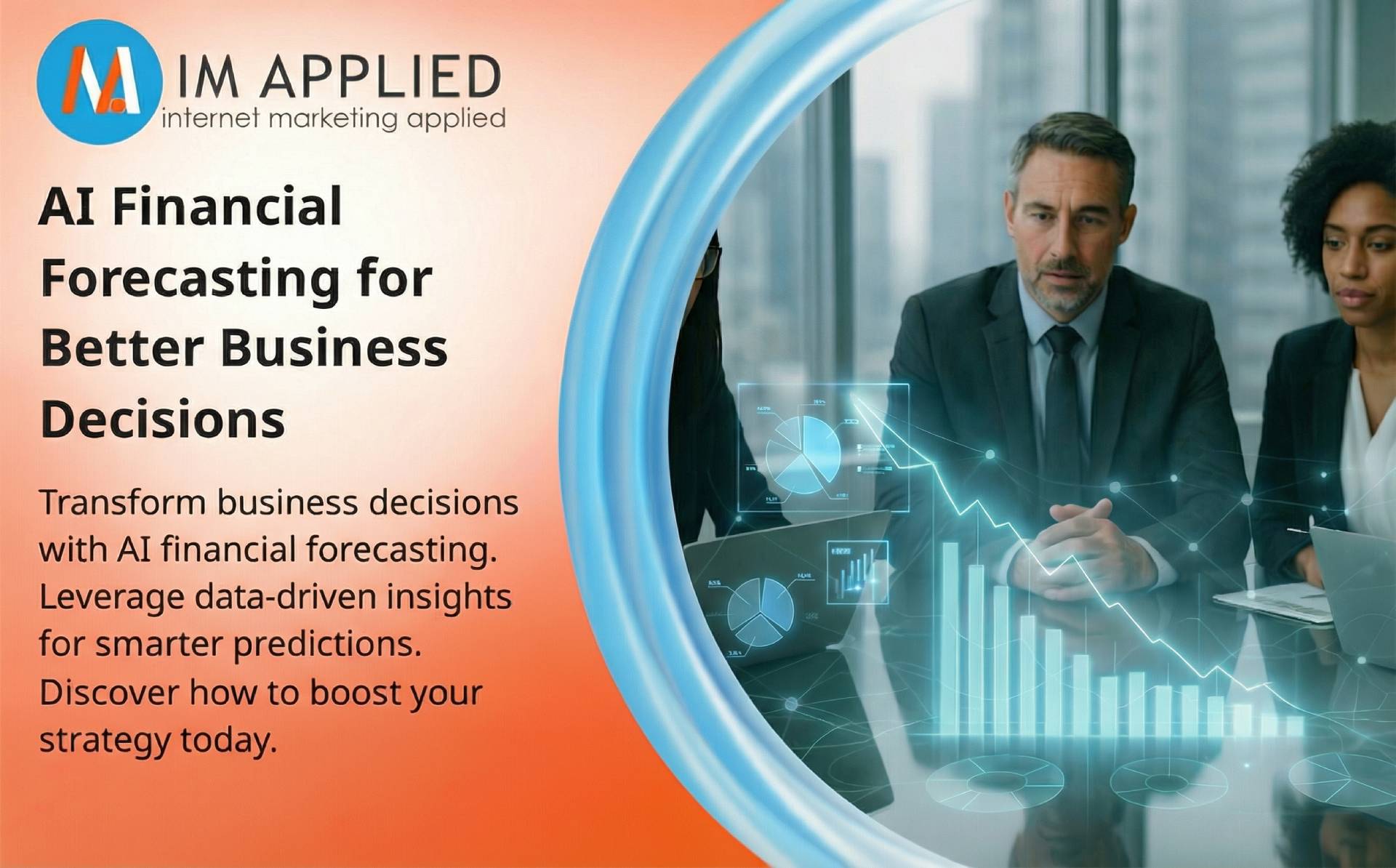
The financial forecasting process has always been a mix of art and science, but today AI is reshaping it. As more finance teams adopt AI tools, the transition is accelerating and extending beyond simple automation.
AI in financial forecasting leverages advanced algorithms and machine learning to analyze vast financial data, revealing insights that were previously hidden.
Introduction to AI in Financial Forecasting
AI is redefining financial planning, moving businesses from traditional forecasting, based mainly on historical trends, to predictive analytics that provide richer, forward-looking insights.
AI can process both structured data (such as balance sheets) and unstructured data (such as social media sentiment), uncovering patterns that inform strategic decisions.
Moreover, AI cuts the time spent on tedious analysis, freeing finance teams to focus on big-picture strategy. As this technology advances, it’s becoming a strategic advantage and a driver for strong ROI in finance.
Defining AI in Financial Contexts
In finance, AI serves as an engine for deep, real-time analytics. Using both historical and current data, AI detects trends and anomalies that might escape manual analysis.
By integrating data from sales numbers to customer feedback, AI helps finance professionals make well-informed, timely decisions.
For example, AI document processing is optimizing compliance and finance workflows, demonstrating practical applications of AI in these areas.
How AI Enhances Financial Forecasting
By automating complex analysis, AI reduces time spent on mundane tasks and continuously learns from new data, offering increasingly accurate forecasts.
AI identifies correlations and risks earlier than standard models, enabling finance experts to focus on innovation and planning.
AI-powered forecasting tools not only streamline processes but also empower companies to make data-driven, strategic decisions.
Reasons to Integrate AI in Financial Forecasting
Implementing AI in financial forecasting is about gaining a competitive edge. AI-enhanced forecasting boosts prediction accuracy, providing leaders with actionable insights to inform dynamic strategies. As markets shift, AI adapts, allowing businesses to respond swiftly.
Beyond speed, AI reduces manual errors and strengthens confidence in forecasts, translating into better decision-making across the organization.
Accuracy and Efficiency
A major benefit of AI is its superior accuracy and speed. AI refines forecasts, reduces error rates, and automates routine analyses.
Tasks that once required hours can now be accomplished in moments, leaving finance pros to focus on strategy and value-adding activities.
Faster, smarter insights drive more proactive business responses, a necessity in today’s ever-changing market.
Cost Reduction
AI helps companies achieve substantial cost savings by streamlining operations and minimizing manual errors. Smaller teams can accomplish more by redirecting time and resources to core business priorities.
Optimized processes not only lower costs but also foster an environment focused on growth and innovation.
Real-time Adjustments
Modern markets require real-time financial forecasting. AI-driven dashboards provide instant insights, empowering finance leaders to tweak budgets and strategies as new data emerges.
This agility ensures businesses stay aligned with goals and stay ahead of competitors.
Implementing AI Financial Forecasting in Business
 Adopting AI in finance means aligning technology, processes, and people for effective change.
Identifying Business Needs
Start by understanding your organization’s financial goals. Determine which forecasting challenges AI can address and focus efforts where the impact will be greatest, from process automation to deeper predictive insight.
Selecting Appropriate AI Tools
Carefully evaluate whether to develop in-house AI solutions or use specialized third-party modules. Choose forecasting software that integrates well with your company’s systems and can grow with future needs.
Learn how to choose the right AI tools here.
Training Your Team
Smooth AI adoption relies on thorough, continuous training. Help teams understand both the functional and strategic benefits of AI, boosting confidence and ensuring accurate interpretation of AI-driven forecasts.
Monitoring and Performance Evaluation
Regularly assess your AI system’s impact using reliable KPIs, such as forecast accuracy and ROI. Consistent evaluations ensure alignment with business goals and enable ongoing optimization.
Use Cases of AI in Financial Forecasting
AI is about precision and strategic improvement across operations, planning, and budgeting.
Revenue Projection
With AI, companies can more accurately forecast revenue by analyzing historical sales data and market indicators.
These tools help optimize pricing, inventory, and product lines, creating a clear path for growth with greater confidence and less guesswork.
Investment Strategy Formulation
AI enhances investment decision-making, identifying profitable opportunities and tracking real-time market trends that humans might miss. These predictive insights improve portfolio management and risk mitigation.
Risk Analysis
AI’s role in risk analysis is invaluable. It detects anomalies, flags fraud, and models business disruptions with speed and precision. As a result, businesses become more resilient and proactive in managing challenges.
Overcoming Challenges in AI Financial Forecasting
 Integrating AI isn’t without hurdles, including data quality, regulatory compliance, and system compatibility.
Data Quality and Access
High-quality, accessible data is the backbone of effective AI forecasting. Businesses must address integration issues and ensure all data, structured and unstructured, supports reliable predictions.
Regulatory and Ethical Considerations
Staying compliant with privacy laws is as important as building ethical AI models. Ensure data is managed transparently and mitigate bias in datasets to guarantee trustworthy outcomes.
System Integration
Seamlessly integrating AI with legacy systems requires thoughtful planning and secure, efficient data exchanges. Bridging these technology gaps supports accurate forecasting across varying infrastructures.
Best Practices for AI-Driven Financial Forecasting
Successful adoption relies on structured processes and a data-centric culture.
Strong leadership, continuous tool assessment, and cross-department collaboration are keys to a sustainable program. Stay current with AI trends and focus on harmonizing human and AI capabilities for improved performance.
Setting Clear Goals and Metrics
Define KPIs, such as forecast variance, to measure success and continually refine your approach. These metrics guide teams to make precise, informed adjustments over time.
Starting with Pilot Projects
Test new AI systems in small-scale, focused projects first. Early wins build confidence and make organization-wide implementation more manageable.
Ensuring Data Security
Protecting sensitive financial data is critical. Invest in secure systems, conduct regular audits, and ensure employees are trained in security best practices to maintain trust and compliance.
Advances and Future Trends in AI Financial Forecasting
AI is advancing financial forecasting, offering adaptive analytics and transforming how businesses anticipate and react to market changes.
As advanced AI and digital twins become more integrated into fintech, companies are moving from historical analysis to proactive, scenario-based forecasting.
Emerging Technologies
Innovations such as generative AI, large language models, and neural networks are enabling more robust predictive models.
These systems handle vast datasets, run simulations, and provide intuitive interfaces for users of all skill levels. This results in smarter, faster, and more accurate forecasting.
Predicting Market Trends
AI empowers businesses to navigate volatility confidently. With powerful algorithms analyzing economic and social data, organizations can anticipate shifts, minimize risk, and take advantage of new opportunities. To get ahead, explore our resources on AI-powered market research.
Conclusion
AI financial forecasting unlocks actionable insights, streamlines operations, and sharpens competitive edge. By embracing AI, finance teams move beyond manual processes to data-driven decision-making, with the best results achieved through a blend of sophisticated tech and human expertise.
As you consider implementing AI in your financial workflows, remember: success depends on clear objectives, strategic integration, and a commitment to continuous improvement.