
The SME Guide to Generative Engine Optimization (GEO): Ranking in ChatGPT and Claude
applied | 16 November 2026

Generative Engine Optimization (GEO) is becoming increasingly essential as artificial intelligence reshapes how users interact with digital content. GEO centers on optimizing content for generative AI platforms like ChatGPT and Claude.
Traditional SEO focuses on search engines like Google, and AEO targets answer engines, but GEO aims to enhance content visibility and engagement within AI-driven conversational interfaces.
These AI platforms now account for a large share of how people consume information, and overlook them risks losing ground to competitors who do not.
Introduction to Generative Engine Optimization
GEO optimizes content delivery within AI environments, ensuring that content appears and resonates effectively with users interacting through AI platforms.
This approach targets AI model outputs, focusing on how these systems generate and present content. It involves structuring data so that AI can use it to answer user queries accurately.
AI continues to evolve rapidly, and GEO’s significance grows with it. Alongside SEO and AEO, GEO ensures content sits aptly within AI responses.
As AI platforms grow in popularity, ranking in tools like ChatGPT and Claude becomes as valuable as traditional search engine ranking. Implementing GEO techniques keeps content visible and effective in AI-driven interactions, rather than letting it go unnoticed.
Why GEO Matters for SMEs
Small and medium-sized enterprises (SMEs) often operate with limited resources yet have vast potential to reach new audiences. GEO offers a direct path to that goal by increasing business visibility in AI-driven dialogues.
AI platforms interact quickly and disseminate information widely, creating avenues for SMEs to reach a broader spectrum of users.
Visibility is a cornerstone of business success, and standing out in an AI-saturated environment requires more than being online. SMEs gain a strong competitive advantage by focusing on GEO, as it targets emerging communication platforms favored by millions.
Higher engagement on these platforms produces more significant interactions, reaching potential clients who prefer AI tools for answers and recommendations.
GEO also carries the benefit of cost-effectiveness. By strategically optimizing content for AI engines, SMEs can command a presence without the heavy financial investment often required for traditional digital marketing.
Small businesses can then channel limited resources into meaningful customer engagement, rather than spreading themselves across every available digital platform.
Understanding AI Platforms: ChatGPT and Claude
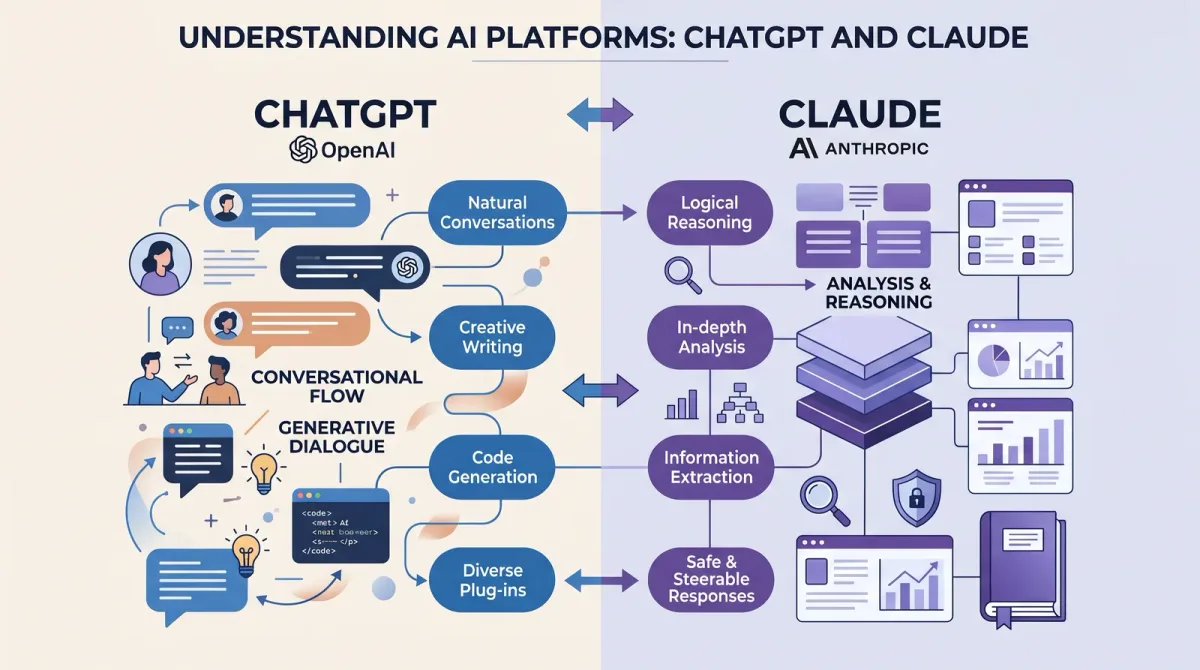
ChatGPT and Claude are leading AI platforms in generative content, each offering unique interfaces and user experiences. Understanding these distinctions is vital for optimizing SME content effectively.
ChatGPT, developed by OpenAI, is a conversational model that generates text based on user input. It assists with tasks like writing, generating ideas, and answering questions.
Businesses optimizing for ChatGPT should focus on creating content that matches a conversational tone and stays relevant, so the output reads as both accurate and engaging.
Claude, by contrast, delivers sophisticated interpretative responses. It handles nuanced queries particularly well, offering in-depth, contextually aware insights. SMEs looking to rank in Claude should provide comprehensive, well-structured content that addresses complex topics clearly and directly.
The two platforms require different content strategies. For ChatGPT, simplicity and clarity are key. Claude demands depth and analytical precision.
Creating a GEO Strategy
A strong GEO strategy begins with identifying which AI queries might attract potential customers. This means considering what questions your audience is likely to ask and how they might phrase them conversationally.
SMEs need to research popular AI-generated queries within their industry to tailor content that addresses these accurately.
Quality content forms the backbone of any successful GEO strategy. Content must answer target queries in a way that is interesting and enriching for the reader, offering value through new insights or relevant solutions to common problems.
Citation optimization is equally critical. AI platforms rely on credible sources to validate the information they provide, so an effective strategy involves curating authoritative and reliable backlinks that strengthen content credibility in the eyes of AI algorithms.
SMEs should cite trusted websites and data sources to establish their content as both reliable and authoritative.
Measuring and Analyzing GEO Success

To fully benefit from GEO efforts, measuring performance and making data-driven adjustments is essential. Key metrics to track include interaction volume, user engagement levels, and conversion rates from AI-generated queries.
Regularly analyzing these metrics reveals how well the current strategy performs. Are users arriving at your content based on the questions they input into AI platforms? Is engagement sustainable over time? These answers allow SMEs to refine their GEO approach and drive stronger results.
Staying flexible and responsive is what separates improving strategies from stagnant ones. When certain content underperforms, revisit the query research phase or adjust the content style to align better with the platform’s output requirements.
Continuous iteration will guide SMEs toward greater success as AI-driven search matures.
Common GEO Mistakes and How to Avoid Them
One common mistake in GEO is neglecting the optimization differences unique to each platform.
Failing to customize content for the specific generative capabilities of different AI platforms leads to missed opportunities for visibility and engagement. It’s important to craft content that plays to the strengths of each AI platform.
Another prevalent error is producing content that lacks depth or engagement value. Content that fails to address user queries promptly or provide valuable insights loses user interest quickly. Thorough research and quality writing that speak directly to audience needs counter shallow content.
Paying attention to detail and prioritizing quality gives SMEs a clear path around these pitfalls and toward stronger outcomes in AI-driven environments.
Conclusion
GEO presents significant opportunities for SMEs competing on AI-driven communication platforms. Smaller businesses that apply GEO best practices can substantially increase their visibility and engagement in this growing space.
SMEs should prioritize investigating relevant AI queries, developing high-quality, authoritative content, and optimizing for the specific requirements of platforms like ChatGPT and Claude. Getting this right positions a business ahead of competitors still relying solely on traditional search.
Concrete next steps include building a feedback loop with rigorous evaluation and refining content to better fit AI interfaces. Businesses that commit to this cycle will capture the opportunities GEO offers before those opportunities become standard practice.