How to Achieve Business Visibility Through Zero-Click Searches
applied | 18 November 2026
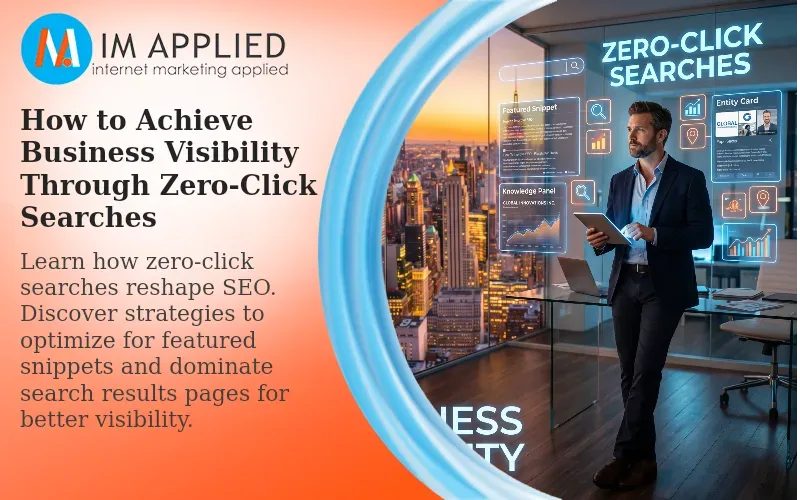
Zero-click searches now account for more than half of all Google searches, reshaping how businesses think about search visibility.
Traditional click-through traffic is declining, and companies are shifting focus toward appearing directly on Search Engine Results Pages (SERPs). Optimizing for zero-click searches has become crucial for maintaining a strong online presence.
Understanding Zero-Click Searches
Zero-click searches occur when users find all the information they need directly on the SERP without clicking through to any website.
This usually happens because the search query returns results like featured snippets, maps, or knowledge panels that answer questions directly.
These features are especially common for straightforward queries like the weather, sports scores, or restaurant locations.
The Rise of Zero-Click Searches in SEO
The prevalence of zero-click searches has grown significantly, driven by enhancements in search engine capabilities.
Google and other search engines have prioritized providing quick, relevant information on the SERP itself to improve user experience.
This trend has a notable impact on SEO strategies. Companies need to rethink their approach, aiming to capture visibility through these SERP features rather than focusing solely on driving clicks to their sites.
Why Zero-Click Searches Matter for Businesses
Impact on Business Visibility
Zero-click searches significantly influence business visibility. Businesses can appear in prominent SERP locations like the top of the page without waiting for users to visit their websites.
That immediate visibility builds brand recognition and authority, since users often regard the most visible results as the most credible sources.
User Behavior Changes
Users are showing a clear preference for instant information over clicking through to websites. Fewer people navigate to external pages, choosing instead to take answers directly from search results.
Businesses that fail to appear in SERP features risk losing contact with users who never reach their sites. Adapting to this shift means meeting users’ desire for efficiency while finding new ways to build engagement directly from the SERP.
Strategies to Gain Visibility from Zero-Click Searches
Optimizing for Featured Snippets
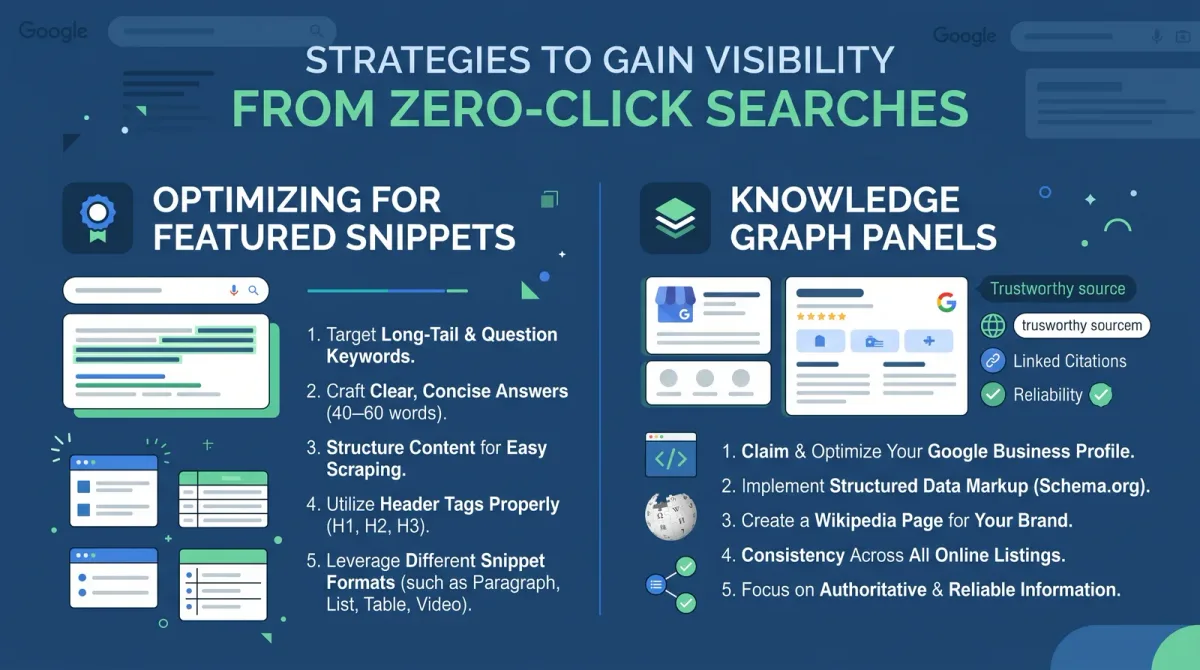
Featured snippets provide concise answers at the top of the SERP, pulling data from web pages that effectively answer user queries. To optimize for these snippets, businesses should structure content with clear, succinct answers to common questions.
Lists, tables, and bullet points often perform well. Anticipating common user queries in your industry and addressing them directly in your content improves the likelihood of earning a snippet position.
Gaining Visibility Through Knowledge Graph Panels
The Knowledge Graph displays informational panels about entities like people, businesses, or places, drawing from sources Google considers well-documented and trustworthy.
Businesses should verify their information on platforms like Google My Business and apply structured data markup to increase their chances of appearing in these entries.
Creating Engaging FAQ Content
FAQs directly address common user queries within content. By integrating FAQs on webpages, businesses create opportunities to capture zero-click searches.
Each question-and-answer pair should be informative, concise, and directly tied to search intent. Strategic placement of FAQs across high-traffic pages increases the number of queries a site can match.
Tools and Techniques for Zero-Click Optimization
SEO Tools for Zero-Click Insights
Specialized SEO tools provide useful data on zero-click search performance. Tools like SEMrush, Moz, and Google Search Console show how often a site appears in SERP features.
That data helps identify which content types generate the most zero-click visibility, allowing teams to concentrate effort where it produces results.
Adapting Techniques for Enhanced Exposure
Structured data markup and local SEO both contribute to zero-click optimization. Structured data helps search engines interpret and present page content more effectively, improving chances of appearing in SERP features.
Local SEO, built on accurate business listings and reviews, reinforces visibility in local search results. Businesses that apply both approaches stay visible even when users never click through to their sites.
The Future of Zero-Click Searches
AI’s Role in Search Evolution
Artificial intelligence is transforming search experiences by tailoring results to user preferences and context. AI advancements allow search engines to predict user queries more accurately and serve relevant zero-click results before users refine their searches.
Businesses that track AI-driven changes to search will be better positioned to maintain SERP visibility as these systems develop.
Voice Search and Zero-Click Interactions
Voice search adds another dimension to zero-click behavior. As more voice-assisted devices come online, users often seek quick, spoken answers to queries.
The brevity and specificity of voice search prompts businesses to consider how their content adapts to this format. Optimizing for voice search means focusing on natural language and concise, relevant answers.
Conclusion
Appearing in featured snippets, knowledge panels, and FAQ results gives businesses visibility that no longer depends on a user clicking through to their site.
SEO tools like SEMrush, Moz, and Google Search Console provide the data needed to identify where those opportunities exist. Structured data markup and local SEO are the most reliable technical methods for improving eligibility for SERP features.
As AI and voice search continue to shape how results are served, businesses that treat zero-click optimization as a central part of their SEO strategy will hold a durable advantage over those still focused solely on click-through traffic.