Data-Driven Social Media Strategy for SMEs
Karl Marais | 22 June 2026
Business owners spend hours crafting social media posts, agonizing over captions, and hoping for an algorithm breakthrough that delivers the leads their business needs. You want more views, higher engagement, and more revenue.
But chasing viral trends or posting just to stay active can kill your profit margins, and burn out your team.
Successful brands don’t rely on creative guesswork. Instead, they use real performance data to guide their next moves. You can tap into these same signals to transform your social channels into a predictable revenue engine.
What Is a Data-Driven Social Media Strategy?
A data-driven strategy shifts social media marketing from guesswork into a targeted, structured approach.
By tapping into social media analytics, you gain insights about what your audience cares about and how they behave. This means you’re not simply collecting numbers, but using them to guide easier and smarter decisions.
With a data-driven approach, your strategy is built on measurable audience behavior, such as what content performs, when your audience is active, and what messages drive conversions.
These insights turn your social media presence into a consistent, growth-oriented engine.
Aligning your social media strategy with business goals creates sustainable growth. Rather than chasing fleeting viral wins, you focus resources where they’ll have the most impact and measure results to continually optimize your efforts.
Defining the Data-Driven Approach
Begin by setting clear goals anchored in measurable audience insights. Social analytics turn data into actionable directions, with metrics like engagement rates guiding tactical refinements.
This approach empowers creativity. Your campaigns become more effective because every creative decision is backed by proven trends and metrics rather than guesswork.
The continuous feedback loop from real-time data lets you pivot quickly, tailoring your narrative to match evolving trends and audience preferences, building trust and loyalty.
How Is It Different from Traditional Marketing?
Traditional social media marketing leans heavily on intuition and past experience. Data-driven strategies, in contrast, emphasize evidence-based tactics.
Instead of focusing on vanity metrics, you focus on actionable metrics tied directly to growth, lead generation, and conversion.
With real-time tracking and analytics, you can see what’s working in real time, enabling quick adjustments, reducing wasted spend, and ensuring your efforts tie directly to business outcomes.
Why a Data-Driven Social Strategy Matters for SMEs
A data-driven social media strategy is especially crucial for small and medium-sized enterprises (SMEs) with limited resources.
Data supports better audience understanding, smarter content, and more effective campaigns, boosting brand awareness and capturing high-quality leads while maximizing ROI.
Leveraging these insights helps small businesses create and sustain meaningful customer relationships, making social media a source of predictable, long-term growth.
Benefits for SMEs
For SMEs, a data-driven approach can help achieve ROI faster. You identify what works, then refine or drop what doesn’t. Tracking key metrics allows you to optimize your budget, scale only what’s performing, and foster sustainable growth without overspending.
Overcoming Common SME Challenges
Limited resources are a fact for most small businesses. Data-driven tactics help minimize waste and ensure every dollar goes towards strategies that work. With analytics, you focus on data points that matter, maximizing impact while reducing noise and unnecessary expense.
Steps to a Data-Driven Social Media Strategy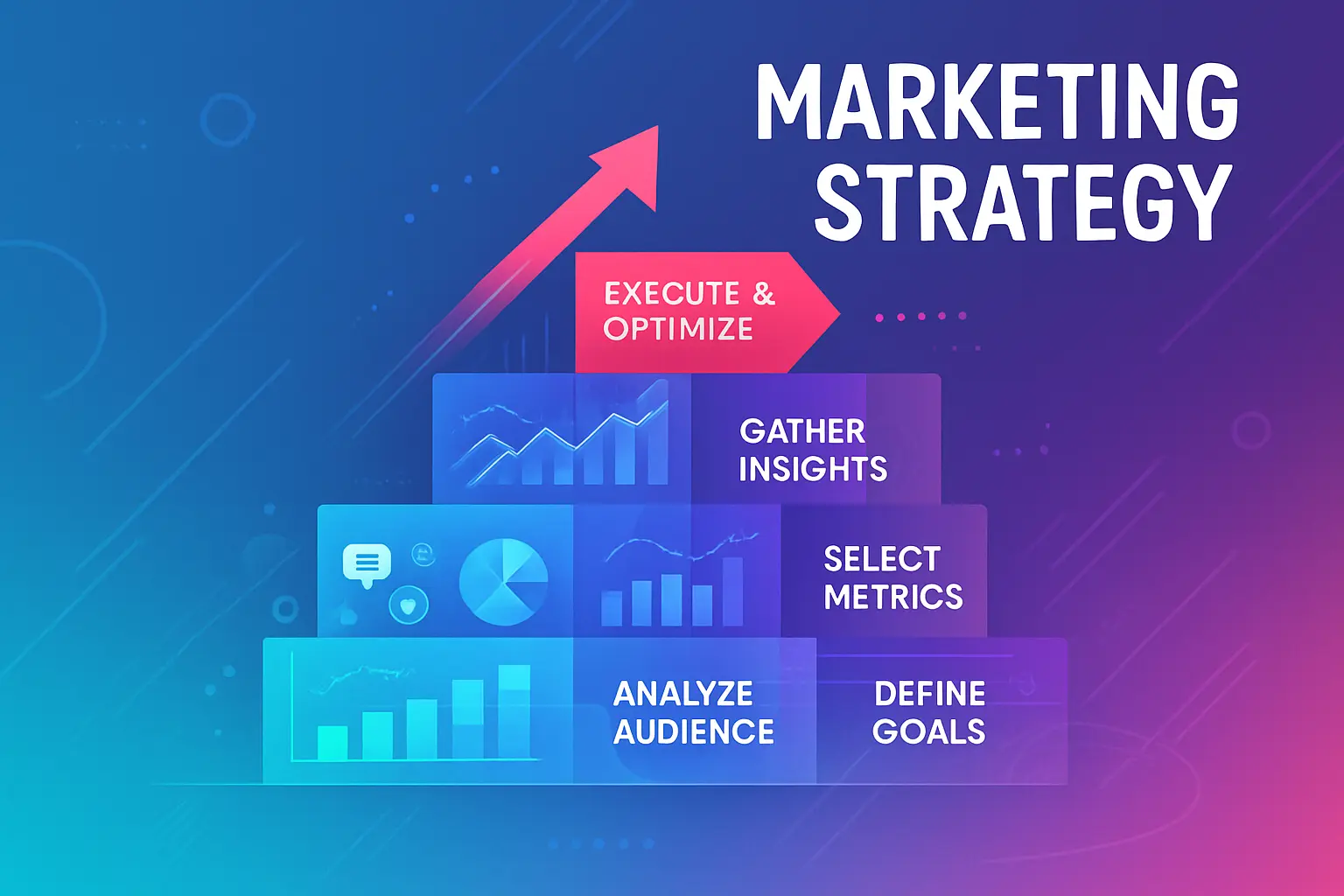
Crafting an effective data-driven strategy is about methodical planning and execution.
1. Identify and Understand Your Target Audience
Analyze demographics, psychographics, and user behaviors to define customer personas and segment your audience. This foundation lets you create tailored content and deliver messages when your audience is most active.
For more, see this article on Using AI to Predict Customer Behavior and Actions.
2. Set SMART Goals and KPIs
Define specific, measurable, attainable, relevant, and time-bound (SMART) goals. Establish key performance indicators (KPIs), like engagement rate, reach, or conversion rate, to track progress and fine-tune your approach.
3. Choose the Right Platforms
Select channels based on your unique business model and where your audience spends time. Whether that’s LinkedIn for B2B or Instagram for retail, optimizing your presence relies on focusing on platforms with proven return.
4. Craft Tailored Content
Engage your audience with a diverse content mix, visual storytelling, short-form videos, and shoppable posts. Use a content calendar for consistency, and adapt the rule of thirds (promotion, sharing value, interacting) for balance.
For more, see this guide to content calendar automation.
Leveraging Data & Analytics
SMEs can turn analytics into a competitive advantage. With centralized dashboards and social listening tools, brands gain a cohesive view of social performance, allowing them to track trends, spot opportunities, and optimise content based on actual results.
Platforms like Sprout Social and Hootsuite provide scheduling and analytics, while tools like Meta Business Suite or native channel analytics reveal audience insights at a granular level. Google Analytics, with UTM tracking, connects social engagement to website actions, painting a full picture of effectiveness.
For deeper insights, competitor analysis highlights industry benchmarks and content gaps, enabling you to elevate your strategy and outpace competition.
Optimizing and Continuously Improving

The hallmark of a true data-driven approach is ongoing optimization. Set routine times to review your metrics rather than leaving your strategy on autopilot.
Evaluate which content and campaigns are performing, and make targeted adjustments. Use A/B testing to compare creatives or headlines, refine CTAs, and find messages that resonate most.
Key metrics to track include:
- Engagement rate: likes, comments, shares
- Click-through rate: how many take action
- Reach vs. impressions: visibility versus actual interactions
- Conversion rate: measuring impact on leads and sales
- Cost per result: efficiency of marketing spend
Adjust your content and tactics according to these findings for continual improvement. Incremental changes, when consistent, deliver transformative results.
A/B Testing for Smarter Tactics
A/B testing allows you to experiment with variables, visuals, headlines, and CTAs, measuring performance for each. Choose winners based on statistical significance to ensure insights are actionable, then reuse and scale successful approaches.
For in-depth guidance, read this A/B testing article.
AI & Predictive Analytics
Sophisticated SMEs can further boost their strategy with automation and AI. AI-driven personalization can help tailor content to audience preferences, while predictive analytics helps anticipate audience behavior and shape future campaigns.
Leveraging these advanced tactics transforms social media into a proactive, not reactive, asset.
Prioritizing Data Privacy and Compliance
Building trust means handling data with care. Ensure your approach aligns with changing privacy laws and ethical standards. Use first-party data, get clear user consent, and maintain transparency.
Regular risk reviews can help you stay aligned with changing regulations, safeguarding your brand and customer relationships.
Conclusion
A data-driven social media strategy offers more than analytics, it’s a blueprint for scalable growth. By rooting your efforts in data and continually optimizing, SMEs turn social media into a reliable revenue driver.
Solid strategies start with clear goals and evolve through constant measurement and learning.
By staying agile and using data to refine your content, platform choices, and tactics, you remain competitive, efficient, and prepared for shifts in the social landscape.
Treat your strategy as a living document by revisiting objectives, learning from real-world results, and unifying your brand’s online presence.
Commit to ongoing education and experimentation, and your social media will become a resilient engine for long-term business growth.