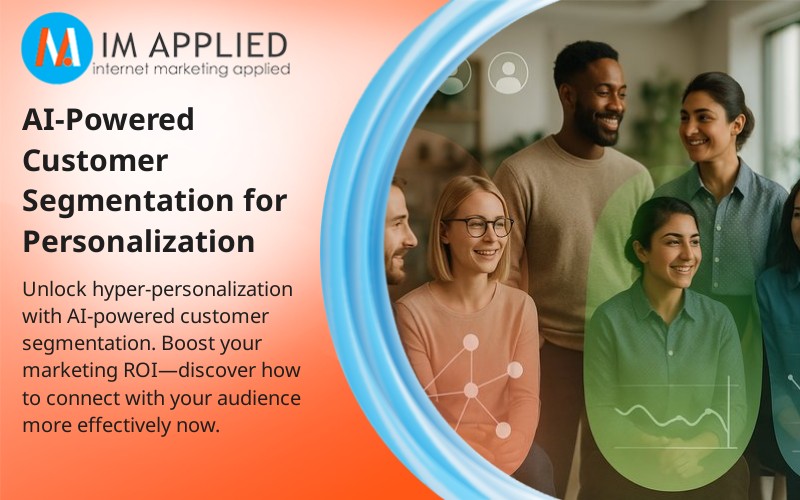
AI-Powered Customer Segmentation for Personalization
Karl Marais | 24 April 2026
Effective marketing comes down to delivering the right message to the right audience at the right time. Yet, the challenge of navigating overwhelming customer data often slows down campaigns and increases risk.
But what if AI could meaningfully improve personalization and marketing ROI?
AI-powered customer segmentation isn’t about replacing your marketing instincts; it’s about amplifying them with data-driven insights, helping you connect with your audience with greater precision.
Understanding AI-Powered Customer Segmentation
AI-powered customer segmentation is transforming how businesses reach their audiences. Where traditional segmentation relied on manual rules and static lists, leading to inefficiencies, AI enables greater precision and relevance.
By utilizing machine learning, AI analyzes customer data such as purchase histories and behavioral patterns to produce accurate, evolving customer segments aligned to real interests and preferences.
The core strength of AI segmentation is its adaptability. With continuous real-time data updates, customer profiles and segments remain relevant and effective, enabling personalized content and offers that resonate.
For businesses focused on optimizing campaigns and engagement, AI segmentation is quickly becoming an increasingly important part of digital marketing strategy.
What is AI Customer Segmentation?
AI customer segmentation uses advanced algorithms to categorize customers according to deep behavioral and predictive insights, not just basic demographics like age or location.
Machine learning models uncover complex patterns within customer data, enabling accurate predictions about future behavior and the creation of highly detailed customer profiles.
The result is granular targeting: campaigns can be aligned with the customers’ preferences, and marketing strategies become dynamic, adjusting in real-time as customers’ needs evolve.
AI provides instant, actionable recommendations that support stronger audience engagement and improved conversion rates.
The Evolution from Traditional to AI-Powered Segmentation
Segmentation has evolved dramatically. Traditional methods were laborious, static, and rapidly outpaced by today’s volumes of digital data.
With AI, businesses now analyze multichannel customer interactions and purchase histories for deeper insights and more adaptable strategies.
AI-driven segmentation empowers marketers to transition from rigid lists to flexible audience strategies that better match ever-changing customer behaviors and expectations.
Why AI Outperforms Traditional Methods
The advantages of AI over traditional segmentation are precision, speed, and adaptability. AI’s ability to uncover hidden patterns across vast datasets helps ensure accurate audience targeting.
As new data becomes available, segmentation can be updated more frequently, helping keep pace with shifting preferences with less manual effort.
This responsiveness reduces errors and enables timely, relevant outreach, giving businesses a significant competitive advantage.
How AI Customer Segmentation Works
AI-driven segmentation leverages machine learning models, clustering, classification, and predictive analytics to analyze transactional, behavioral, and demographic customer data.
This approach enables marketers to create dynamic segments that adapt quickly to changes in customer behavior, leading to more tailored and effective campaigns.
The effectiveness of AI segmentation comes from its high-quality, broad data inputs, sourced from CRM systems, CDPs, and digital interactions. These assets ensure segments are built with depth and accuracy, empowering marketers to act on rich customer insights.
Learn more about AI analytics here.
Building Customer Segments with AI
AI uses advanced models to sift through large datasets, identifying unique segments and predicting future behaviors like churn risk or purchase likelihood.
Analysis spans purchase activity, web behavior, and social engagement. Through identifying patterns in customer behavior, AI delivers actionable insights, enabling fine-tuned, highly relevant marketing.
The Importance of Data Analysis
AI segmentation’s effectiveness hinges on strong data analysis, processing unified, high-quality data to identify hidden patterns.
By leveraging robust CRMs and CDPs, businesses enhance data integrity, leading to accurate and meaningful segments. Comprehensive analysis reveals insights about preferences and habits that manual approaches may miss.
Machine Learning’s Impact
Machine learning brings automation and continuous improvement to segmentation. Clustering and classification allow real-time reallocation of customers between segments as needs and behaviors shift.
Predictive models spot trends and automate movement within segments, helping the marketing team.
From Segmentation to Personalization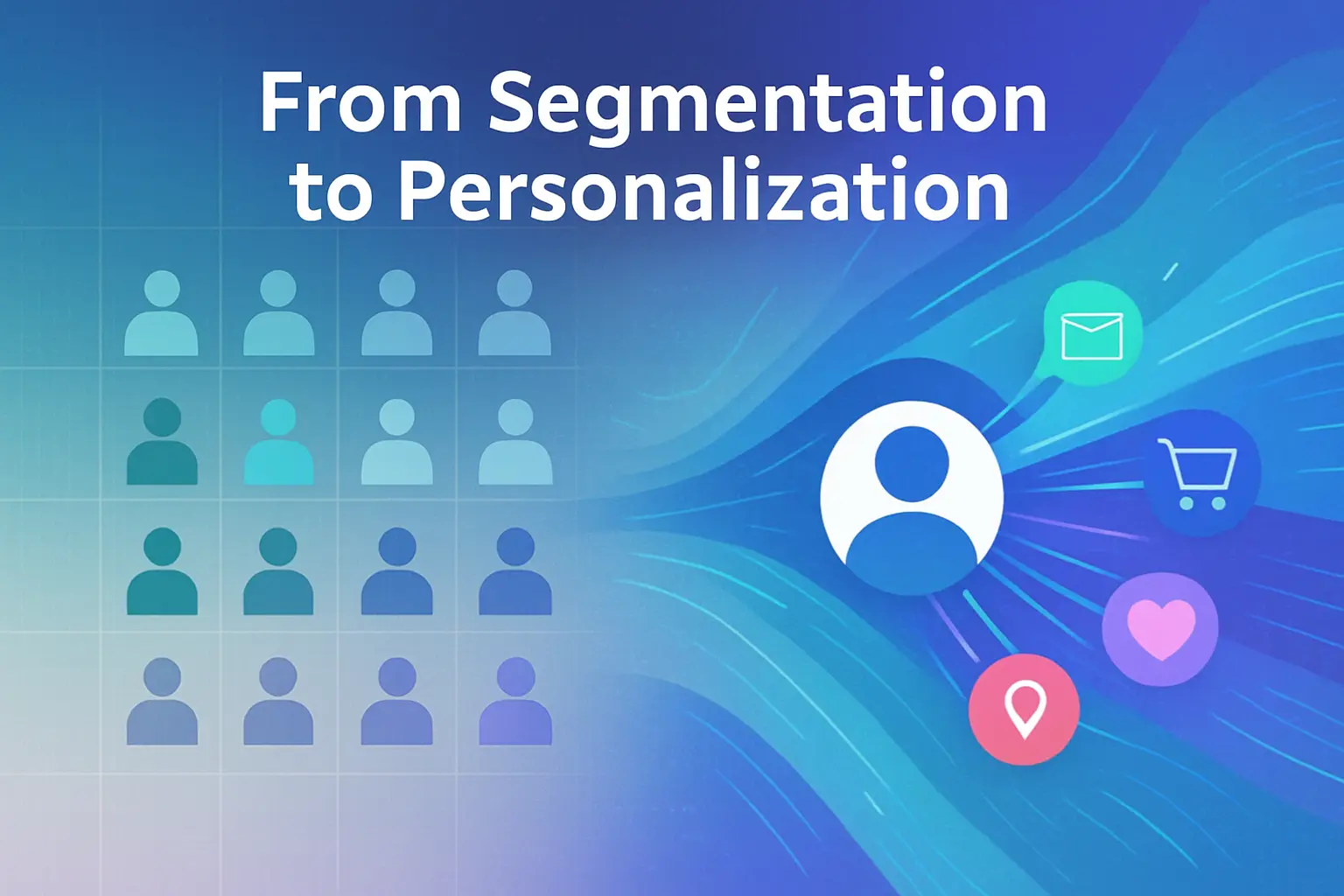
AI-driven segmentation sets the stage for hyper-personalization. By understanding rich customer data, marketers craft experiences tailored to each segment’s preferences and moments.
AI’s omnichannel integration ensures personalized messaging across email, web, apps, and more, ensuring every touchpoint is timely and relevant.
Brands that leverage AI combine real-time insights with orchestration strategies for dynamic, personal engagement, without losing the human touch.
Key Benefits of AI-Driven Customer Segmentation
AI segmentation delivers:
- Higher ROI: Accurately identify and target the most profitable customer segments, improving budget efficiency.
- Personalized Experiences: Deliver tailored content that boosts retention and engagement.
- Efficiency Gains: Automate data analysis, freeing human talent to focus on creativity and strategy.
- Competitive Advantage: Stay ahead by adapting quickly to new trends and customer shifts.
The combination of human creativity and AI analytics leads to marketing that’s both effective and efficient.
Implementing AI Customer Segmentation
Integrating AI segmentation into your marketing stack can be manageable with the right approach. Success starts by aligning AI tools with business objectives, whether boosting engagement, reducing churn, or improving conversion rates.
Evaluate your current data infrastructure, and select AI solutions that complement your CRM and CDP systems. Unified data integration helps create seamless, cross-channel insights that power accurate segments.
The implementation journey focuses on configuring tools for data flow, refining targeting precision, and enabling truly personalized content delivery.
The Future of AI in Customer Segmentation & Personalization
As AI evolves, segmentation and personalization become smarter, more predictive, and automated. Advanced machine learning identifies ever-subtler customer patterns, allowing marketers to anticipate needs and deliver more effective customer experiences, and supporting stronger ROI.
Emerging Trends
Key AI segmentation trends include:
- AI agents: Automating decision processes for faster campaign adjustments.
- Self-optimizing strategies: Real-time adaptation of segments and campaigns based on feedback loops.
- Dynamic decisioning: Enhanced flexibility to quickly pivot to evolving customer needs.
AI’s growing adaptability supports more relevant, personalised experiences. Marketers adopting these tools will stand out in crowded markets.
Automated Audience Building
With automated audience building, AI agents create and refine audience segments with minimal manual input. This allows marketing teams to spend more time on creative strategy, while smart AI recommendations help campaigns stay highly targeted, improving efficiency and campaign outcomes.
Preparing for Autonomous Personalization
Autonomous personalization is an emerging direction: AI-driven, self-learning systems dynamically adjust messaging and offers in real time.
Experimentation and real-time improvement ensure each customer interaction is relevant, boosting loyalty and business results. Brands adopting these proactive solutions can better respond to evolving customer expectations with personalized experiences.
Conclusion
AI-powered customer segmentation is shifting marketing from broad assumptions to data-led precision. Instead of relying on static lists and manual rules, businesses can now understand behavior in real time, adapt to changing customer needs, and deliver messaging that is relevant.
The value is not just in better targeting, but in how it improves the entire marketing process. Campaigns become more efficient, decisions more informed, and customer experiences more aligned with what people actually want.
When supported by strong data and the right tools, AI segmentation moves from a tactical advantage to a core part of how modern marketing operates.
Businesses that invest in this approach position themselves to respond faster, personalize at scale, and compete more effectively in increasingly crowded markets.