
Mapping Content to Lead Conversion Stages
applied | 5 August 2026
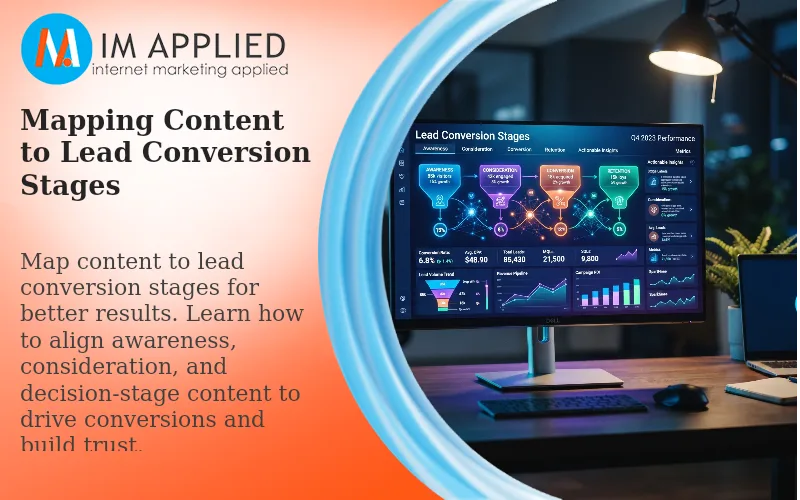
Marketers who map content to lead conversion stages consistently outperform those who publish without a funnel framework.
Aligning content with each phase guides potential customers toward a purchase decision and builds the kind of trust that generic outreach rarely achieves.
Understanding Lead Conversion Stages
A lead conversion funnel describes the series of stages a potential customer moves through before making a purchase. These stages typically include awareness, consideration, and decision.
At the awareness stage, prospects recognize a need or problem. During the consideration phase, they explore options and solutions. In the decision stage, they choose a product or service to fulfil that need.
Why Mapping Content is Crucial
Mapping content across these stages is essential for targeted engagement. Tailored content addresses specific needs and questions at each point in the funnel.
By providing relevant information at the right time, marketers can build trust and nurture leads toward a purchase decision.
Types of Content for Each Stage
Top of the Funnel (Awareness)
At the top of the funnel, potential customers are not yet aware of specific products or solutions. Educational content is key here.
Blog posts, infographics, and social media content that highlight industry insights or common problems can capture interest. The goal is to surface challenges prospects may not have considered yet.
Middle of the Funnel (Consideration)
In the middle stage, prospects begin evaluating possible solutions. Content should focus on deeper value propositions.
Webinars, case studies, and in-depth guides offer thorough insights that help prospects compare options and understand how different solutions can meet their needs.
Demonstrating expertise and authority in your field can effectively engage potential buyers during this stage.
Bottom of the Funnel (Decision)
Prospects at the decision stage are ready to commit. Content should alleviate final concerns and motivate action. Free trials, product comparisons, and customer testimonials serve well at this point. Reinforcing benefits and providing proof of past successes gives prospects the confidence to move forward.
Creating a Content Map
Identifying Customer Personas
A content map starts with a clear picture of who your customers are. Identifying different customer personas helps align content with diverse needs.
These personas should include details about demographics, interests, and behaviors. Knowing these specifics makes it possible to craft targeted content for different segments.
Aligning Content Topics with the Funnel Stages
Each stage of the funnel requires dedicated content topics that resonate with prospects’ mindset at that phase.
During awareness, focus on informative content. In the consideration stage, provide detailed solutions and comparisons. At the decision stage, offer strong purchase incentives. This alignment delivers appropriate messages throughout the customer journey.
Using Analytical Tools for Mapping
Analytical tools reveal which content pieces have the most impact at each stage. Tools like Google Analytics or HubSpot track user interactions and surface content performance data. Applying these insights keeps content effective and grounded in audience behavior rather than assumption.
Best Practices for Content Mapping
Regularly Updating Content Strategies
An effective content strategy is dynamic. As market trends shift and customer preferences change, content must adapt accordingly. Ongoing evaluation maintains alignment with target audience expectations.
Measuring Content Effectiveness
Metrics play a pivotal role in understanding content success. Tracking engagement rates, conversion rates, and bounce rates reveals how content is performing across the funnel. The data points to where strategy and content need adjustment to better suit audience preferences.
Collaborating Across Teams
Successful content mapping requires collaboration across marketing, sales, and customer service. Sharing insights and objectives keeps messaging consistent and integrates content efforts into broader business strategies.
Cross-team input also builds a more complete picture of customer needs, which produces more targeted content.
Conclusion
Targeted content at each funnel stage guides prospects, meets their needs, and fosters lasting relationships. A well-laid plan gives every piece of content a clear role in moving leads forward.
Regularly assessing and refining strategies based on performance metrics and customer feedback sharpens results over time. Adapting to change keeps content relevant as market conditions and audience expectations shift.
Aligning content with lead conversion stages closes the gap between sales and marketing. Both departments work toward shared goals with a consistent message, and that consistency strengthens the overall customer experience.