AI-Driven Website Personalization That Increases Conversions
Karl Marais | 19 January 2026
AI-driven personalization may seem like a complex puzzle with endless data points and algorithms. Shoppers crave experiences just for them, but is true personalization possible, or just an industry aspiration?
Traditional personalization only goes so far. The strategic value lies in AI’s ability to analyze behavior in real time, infer intent, and personalize interactions at scale to increase conversions.
The Role of AI in Website Personalization
Artificial intelligence has significantly advanced website personalization, allowing businesses to better engage users through more adaptive, data-driven experiences.
Unlike manual methods, AI-driven personalization uses machine learning to analyze massive behavioral datasets, delivering precise, relevant customer experiences.
AI can infer what users want, sometimes before they know it themselves. Sessions become more personalized, and dynamic adaptation of content and interfaces can lead to higher satisfaction and conversions.
AI transforms the customer journey into a series of meaningful, real-time interactions. Early adopters consistently report stronger engagement metrics, higher ROI, and loyal audiences.
What is AI-Driven Website Personalization?
AI-driven personalization uses AI-powered tools to optimize digital experiences for each visitor.
Rather than displaying the same webpage to everyone, these systems assess browsing habits, purchase history, and real-time interactions to deliver content tailored to individual preferences.
For example, if a shopper often browses a particular shoe brand, AI seamlessly highlights similar products. Each click and interaction refines the experience, helping businesses build authentic connections and improve retention.
For marketers, AI-based personalization is a game-changer for audience engagement.
How AI Personalization Works
AI personalization continuously analyzes visitor data, using machine learning to infer user intent and adjust digital experiences in real time.
This allows websites to move beyond simple reaction and respond proactively to likely user actions, crafting adaptive journeys that drive engagement.
Refined algorithms sift through patterns in massive data sets, allowing businesses to target needs with precision and keep interactions fresh.
Key Benefits of AI-Driven Personalization
AI personalization powers significant business growth and grants a competitive edge. By analyzing real-time customer data, businesses adapt to shifting needs, boost customer loyalty, and improve the return on marketing spend.
When implemented effectively, this can contribute to higher ROI and stronger retention.
Increased Conversion Rates and Customer Engagement
AI drives higher conversions through hyper-relevant recommendations and seamless, personalized interactions.
Customers receive offers and content tailored to their preferences, reducing cart abandonment, improving click-through rates, and encouraging repeat purchases.
Over time, these personalized experiences can contribute to higher customer lifetime value and stronger retention.
Cost Efficiency and Resource Allocation
AI not only improves customer outcomes but also reduces operational costs. Automation of many marketing tasks enables scalable personalization without large staffing increases. This lets businesses focus resources on strategy and creativity, maximizing ROI. (AI & Cost Efficiency.)
Essential Components of AI Personalization
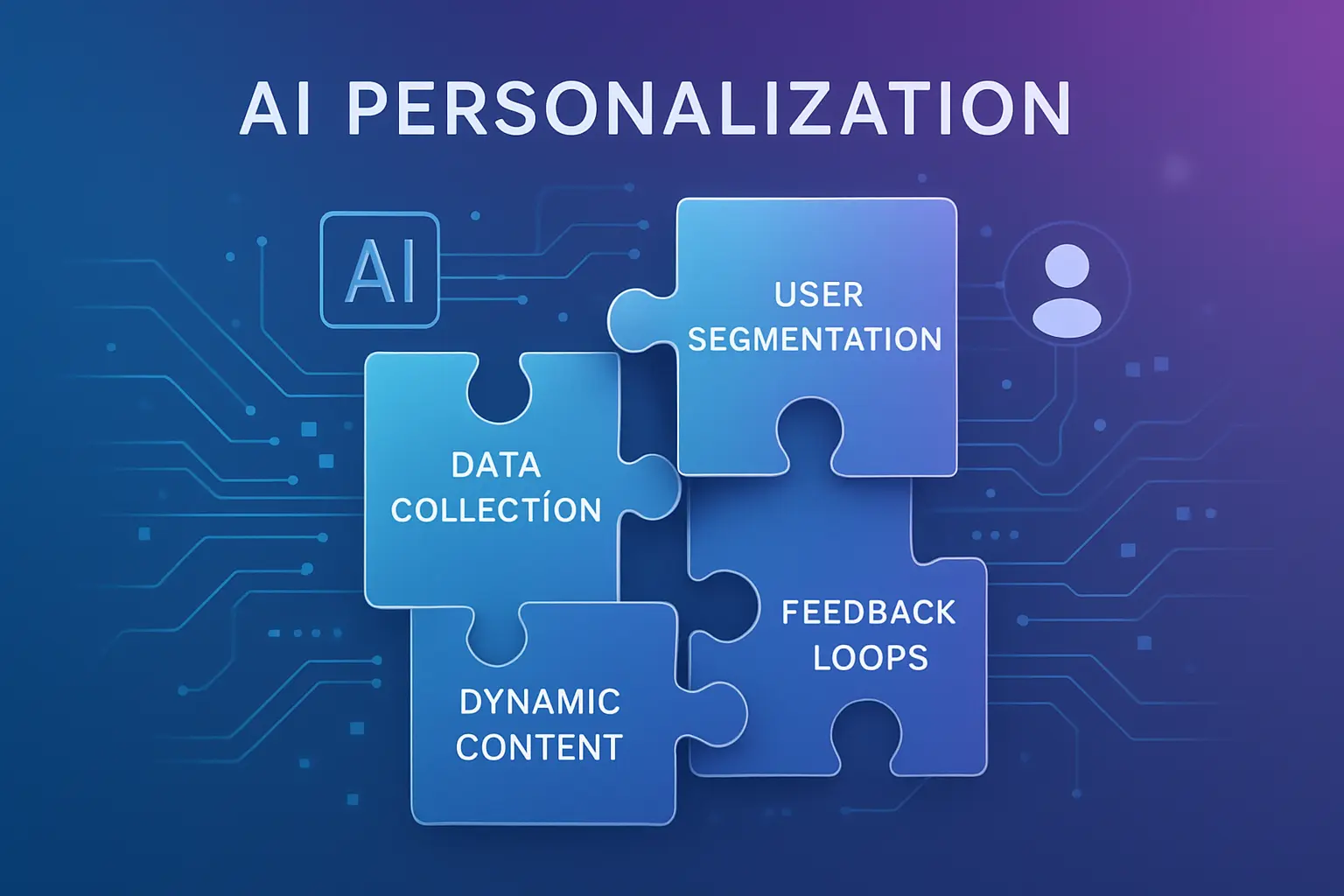 A successful AI personalization strategy relies on robust data collection, an integrated technology stack, and an adaptable personalization framework.
Collecting and processing user data from websites, apps, and social media fuels dynamic, real-time experiences. Balancing data depth with privacy ensures actionable insights.
The right AI tools, such as machine learning models, integrate seamlessly and deliver tailored content. Adapting your framework as you grow ensures your system stays agile and customer-focused.
Data Collection and Analysis
Effective personalization starts with high-quality data collection- behavioral, transaction, and demographic data. Customer data platforms (CDPs) unify these sources into actionable profiles.
Data must be analyzed rigorously to uncover insights, predict trends, and power effective personalization. Data quality is paramount, and clean, unified data leads to better decisions and higher conversions.
Machine Learning Models and AI Algorithms
The backbone of AI personalization is machine learning and AI algorithms. Collaborative filtering, deep learning, and natural language processing (NLP) fuel predictive recommendations, hyper-relevant content, and smart chatbots.
These technologies identify patterns, adjust strategies in real time, and help reduce friction and improve conversion performance.
Integration with Existing Digital Ecosystems
For AI personalization to succeed, strong system integration is crucial. AI must connect with your existing CRM, CMS, and marketing tools to tap all available data.
API-first tools and headless CMS options offer flexibility and scalability, allowing businesses to personalize experiences across channels, from websites to apps and email.
Techniques and Strategies for Effective Personalization
Successful personalization starts with in-depth audience segmentation and data analysis. Identify audience groups, deliver targeted experiences, and continuously improve with A/B testing. Each campaign is refined to maximize impact, ensuring your marketing resonates.
Dynamic Content Personalization
Dynamic content enables a more personalized experiences. AI powers custom landing pages, personalized messaging, and even dynamic pricing which helps adapt user behavior for organic relevance and higher loyalty. Real-time visual content or articles further increase engagement and conversions.
Behavioral Tracking and Predictive Targeting
Tracking browsing and purchase history allows businesses to infer likely customer intent. Predictive targeting helps identify high-value users and suggest next-best actions, aligning interactions with evolving needs.
Real-Time Adaptation and Responsiveness
Real-time personalization means content adapts instantly to user actions. Whether that’s an abandoned cart prompt or an instant offer, these micro-moments drive immediate engagement, loyalty, and increased conversions.
AI Personalization Tools and Technologies
 Modern AI personalization tools harness advanced algorithms to create differentiated user journeys.
They analyze behavior, predict preferences, and automate content delivery across every touchpoint, helping improve engagement and conversion performance.
Overview of Top AI Personalization Tools
Leading tools such as Adobe Target, Braze, Dynamic Yield, CleverTap, and Insider offer comprehensive personalization features, including behavioral insights, real-time adjustments, and A/B testing.
VWO, Tealium, Personyze, and Contentstack enhance personalization by supporting flexible integration, omnichannel content, and scalable testing.
Key Features to Look for in AI Tools
Choose AI personalization tools with robust A/B testing, targeting, analytics, and segmentation.
Prioritize intuitive editors, omnichannel capabilities, and compliance controls to deliver seamless, impactful customer experiences. The right features ensure your strategies stay agile and effective. See more in AI for smarter testing.
Improving Customer Experience with AI
AI enables businesses to deeply understand individual shoppers, crafting personalized, value-driven journeys.
Real-time analysis can guide visitors step by step, helping create experiences that are seamless and meaningful, leading to higher conversions and satisfaction.
Personalized Product Recommendations
AI’s recommendation engines use purchase and browsing data to offer tailored suggestions, boosting cross-sell and upsell rates. This direct relevance increases conversion and order value, while enhancing overall brand experience.
AI-Powered Customer Interactions
AI chatbots provide 24/7 real-time support, resolving common queries and offering tailored advice.
With ongoing training and feedback, these chatbots can improve over time, supporting conversational shopping and customer engagement.
Timely Nudges and Reminders
AI sends strategic, well-timed reminders such as wish list alerts, push notifications, or abandoned cart nudges, designed to reengage. This keeps your brand top-of-mind and your offers relevant.
Challenges and Considerations
While the rewards are high, AI personalization does have hurdles such as implementation complexity, risk of disruption, and ensuring accurate targeting.
Transparency and ethics are non-negotiable. Businesses must avoid over-personalization and strictly safeguard user data to build trust and credibility.
Privacy and Ethical Concerns
Ensure data privacy and clarify data usage to users. Oversharing or intrusive practices erode trust, so businesses should set transparent, responsible data-use policies. See more in Ethics in AI Marketing.
Ensuring Data Security and Compliance
Robust data security and compliance with regulations like GDPR are essential. Use secure data governance, prioritize consent management, and anonymize data where possible to meet both ethical and legal standards.
Balancing Automation with Human Touch
Despite automation’s appeal, a human touch remains invaluable. Feedback loops and opportunities for manual intervention keep experiences warm and personal. Blending tech with empathy can help build deeper customer loyalty and higher conversions.
The Future of AI-Driven Personalization
The next wave of AI personalization will become even more predictive and seamless, inferring likely customer intent earlier in the journey.
Agentic AI, autonomous personalization, and generative AI are poised to craft dynamic, cross-channel experiences, helping make journeys more relevant and engaging.
Emerging Trends and Innovations
Innovative tools now autonomously respond to behavior, generate content on demand, and orchestrate journeys across multiple digital channels.
Digital experience management platforms help maintain consistency and strategic alignment as this technology matures.
Preparing for the Next Gen of Personalization
Success demands a strong data infrastructure and phased implementation. Start with CDPs, refine with pilot programs, and ensure all AI aligns with larger business goals.
Businesses embracing digital-first, AI-powered strategies will see higher conversions and a sustainable competitive edge.
Conclusion
AI-driven personalization is no longer about novelty or surface-level customization. When grounded in strong data foundations, ethical practices, and phased execution, it becomes a strategic capability that improves relevance, efficiency, and performance across the customer journey.
The businesses that succeed will be those that balance automation with judgment, personalization with privacy, and innovation with measurable outcomes, using AI not to overwhelm users, but to serve them better and convert with intent.