
AI Tools for Identifying Customer Patterns
applied | 3 September 2026
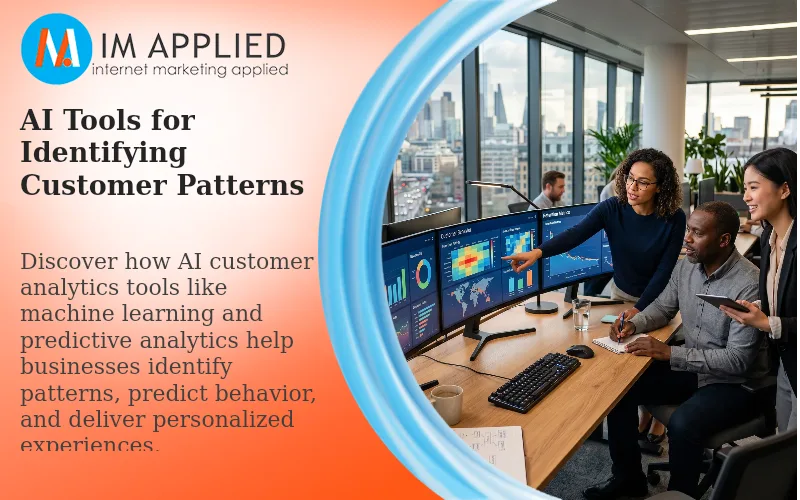
AI is reshaping customer analytics, giving businesses unprecedented insight into customer behavior.
Companies that once relied on historical sales data and direct feedback can now predict trends and personalize experiences using real-time data. These capabilities uncover patterns that would remain invisible to manual analysis.
The Evolution of Customer Analytics
Customer analytics began as a way to understand consumer behavior through direct feedback and historical sales data. This approach had real limitations in scale and depth.
AI has transformed customer analytics from a retrospective activity into a proactive strategy, letting businesses anticipate needs rather than simply react to them.
The Rise of AI in Business Intelligence
AI has rapidly integrated into business intelligence, providing tools capable of processing and analyzing complex data sets. Through AI, businesses gain insight into customer preferences, emerging trends, and potential areas for growth.
The ability to synthesize enormous amounts of information makes AI a crucial component of modern customer analytics.
Types of AI Tools for Identifying Customer Patterns

Machine Learning Algorithms
Machine learning algorithms excel at recognizing patterns in data sets. They improve automatically through experience, allowing businesses to discover trends and predict customer behavior based on historical data.
Retailers, for example, use machine learning to predict purchasing trends and manage inventory accordingly.
Natural Language Processing
Natural Language Processing helps businesses analyze customer sentiment and feedback. By interpreting language from sources like social media and reviews, NLP provides insight into customer opinions and satisfaction levels.
That analysis informs targeted customer engagement strategies and product improvements.
Predictive Analytics Tools
Predictive analytics uses historical data to forecast future customer behavior. Businesses apply these tools to anticipate customer needs and develop strategies accordingly.
Marketers, for instance, can identify which products to promote during specific seasons based on past purchasing patterns.
Benefits of Using AI for Customer Pattern Recognition
Improved Decision Making
With AI, businesses make more informed decisions by accessing accurate, comprehensive data analysis. Strategy development becomes sharper, and marketing efforts grow more targeted. Confidence in those decisions rises when backed by AI-driven insight.
Enhanced Customer Experience
AI tools enable personalized customer experiences, which matter in an era where consumers expect tailored interactions. By understanding individual preferences, companies deliver relevant content and offers that boost satisfaction and loyalty.
Efficiency in Data Processing
AI automates the data analysis process, reducing the time and resources needed for manual data evaluation. Teams can focus on creating value from insight rather than getting bogged down in processing.
Challenges and Limitations

Despite its benefits, AI in customer analytics presents challenges that require careful consideration.
Data Privacy Concerns
Handling large amounts of customer data raises privacy and security issues. Businesses must comply with data protection regulations to maintain customer trust.
Complexity and Costs
Implementing AI tools is complex and can be costly. Significant investment in technology and expertise may be required, which creates a barrier for smaller enterprises.
Bias in AI Algorithms
AI algorithms can inadvertently incorporate biases from input data, producing skewed results. Continuous monitoring and refinement of algorithms are necessary to maintain fairness and accuracy.
Implementing AI Tools in Your Business
Steps to Integration
Start by defining clear objectives and identifying the areas where AI can add the most value. Assess existing resources and determine the necessary technological upgrades.
Choosing the Right Tools
Select AI tools that align with your business needs and scale. Prioritize tools that are user-friendly and offer strong support and compatibility with existing systems.
Training and Development
Prepare your team with adequate training to use AI tools well. Build internal expertise or partner with AI specialists to get the most from your chosen technology.
Conclusion
AI is central to modern customer pattern analysis and offers significant advantages to businesses willing to commit to it.
Stronger decision-making, more relevant customer experiences, and faster data processing are the clearest returns from AI integration. Each benefit compounds the others: better data leads to sharper strategy, which produces more satisfied customers.
As AI technology advances, its capabilities in predictive analytics and customer insight will expand. Businesses that build expertise now will be better positioned to apply those capabilities as they mature.
Businesses should plan AI integration carefully, accounting for potential challenges around privacy, cost, and algorithm bias. A structured approach ensures implementation stays effective and aligned with broader business goals. That alignment matters most when pressure mounts to move fast.