AI in Marketing: What To Outsource and What To Keep In-House
applied | 26 June 2026
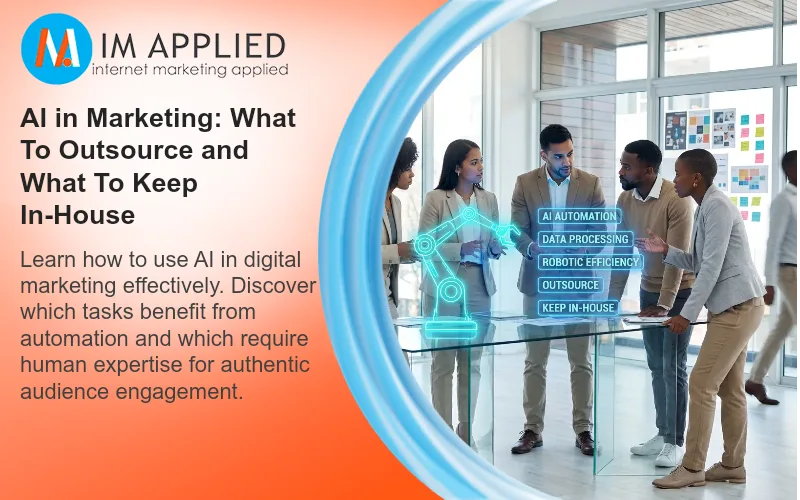
Marketing professionals often find themselves juggling a multitude of tasks. Managing various digital marketing campaigns can make the workload overwhelming, while balancing content creation, social media posting, email marketing, and SEO is challenging and time-consuming.
Outsourcing some of these activities to AI could save marketers significant time and effort. AI has become increasingly adept at handling repetitive and data-driven tasks, promising efficiency and consistency.
Navigating the integration of AI with caution matters, though. While AI can manage a wide range of functions, not every marketing activity benefits from automation.
Some tasks deeply rely on human intuition, creativity, and strategic thinking. Placing them in AI’s hands could lead to a disconnect with your audience.
Knowing when to use AI and when to rely on human expertise is crucial. Striking a balance keeps your marketing efforts effective. AI’s value lies in its ability to complement human capabilities, not replace them entirely.
The key is enhancing productivity while maintaining the authenticity that allows you to truly connect with your audience.
Understanding AI in Digital Marketing
Computer systems built on artificial intelligence perform tasks that typically require human intelligence, including cognitive functions such as learning, reasoning, and problem-solving. In digital marketing, AI has evolved considerably, offering capabilities that help marketers optimize their strategies.
AI in marketing has progressed from basic automation to sophisticated algorithms that predict consumer behavior, personalize content, and analyze vast amounts of data.
These advancements make AI a valuable tool for improving efficiency in digital campaigns. A major benefit of AI automation is its ability to handle repetitive tasks quickly and accurately, freeing marketers from mundane duties.
Machine learning algorithms pinpoint patterns in consumer data and predict future trends. This capability aids in creating personalized and targeted marketing strategies, offering a more customized experience for consumers.
Processing large volumes of data efficiently, AI empowers marketers to make informed decisions that enhance customer engagement.
AI improves accuracy in tasks like data analytics and predictive modeling as well as efficiency. The result is more precise marketing strategies and more relevant individual user experiences.
Understanding these fundamental attributes of AI is crucial in applying its strengths while also recognizing its limitations.
Digital Marketing Activities You Can Outsource to AI
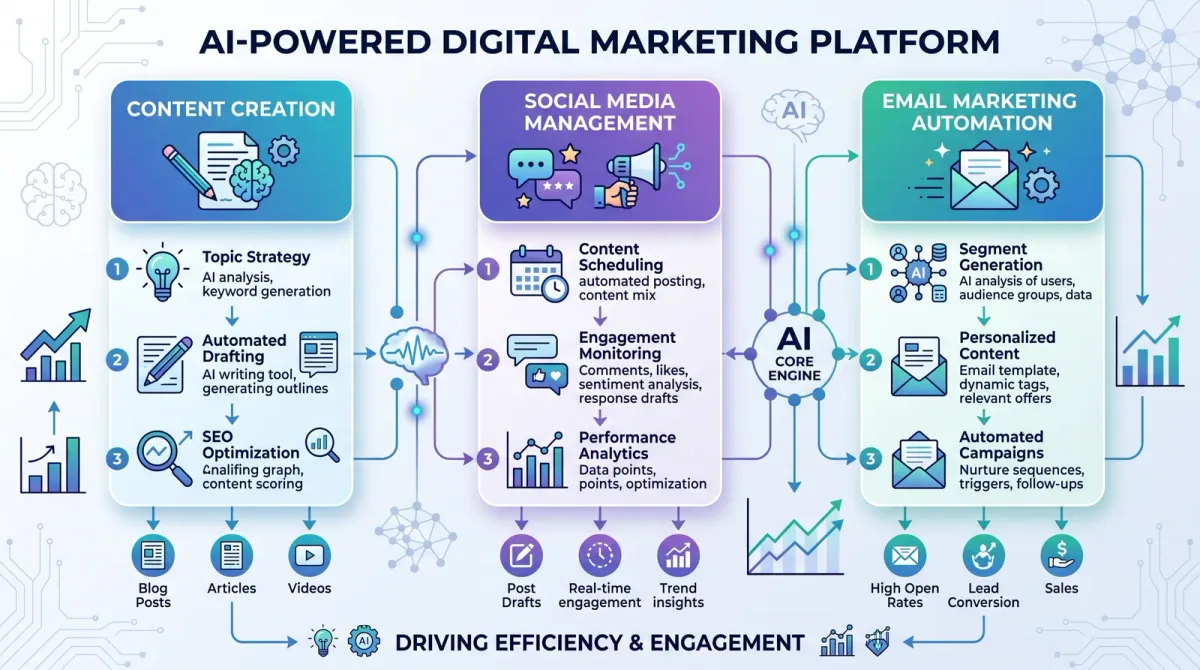
Several digital marketing activities are well-suited for AI outsourcing. These tasks generally involve repetitive processes or data handling that AI excels at managing.
-
Content Creation and Curation: AI tools can generate written content from predefined templates and curate material based on user preferences. For instance, AI can create drafts for blog posts or produce social media updates by analyzing trending topics and user behavior. You can be sure I used AI to draft this post before adding my spin to it.
-
Social Media Management: Automation tools powered by AI can schedule posts, respond to common inquiries, and analyze engagement metrics. Marketers can maintain an active social presence without manual intervention for every interaction.
-
Email Marketing Automation: With AI, email campaigns can be tailored specifically to customer preferences and behaviors. Automated sending of personalized emails at optimal times increases open rates and conversions.
-
SEO and SEM Tasks: AI can analyze keywords, generate SEO-friendly content suggestions, and manage bidding for SEM campaigns. Websites get optimized and performance metrics tracked without constant manual effort.
These tasks typically involve routines or data patterns that AI can master. By outsourcing them to AI, businesses can focus their human resources on strategic and creative endeavors instead.
Digital Marketing Activities You Should Not Outsource to AI
Certain digital marketing activities require a human touch and should stay out of AI’s hands entirely.
-
Strategic Planning and Creative Campaigns: Genuine creativity and strategic thinking remain human strengths. Conceptualizing original campaigns and developing bold marketing strategies require human input and intuition that AI lacks.
-
Relationship-Building and Engagement: Building relationships with customers involves understanding emotions and responding with empathy. AI lacks the capacity for nuanced human interaction that is crucial to fostering genuine connections with an audience.
-
Complex Data Interpretation: AI can crunch numbers, but interpreting nuanced marketing data to understand underlying trends typically requires human insight. Marketers apply their understanding of context and subtlety to derive actionable intelligence from data.
-
Brand Voice and Authenticity Maintenance: Preserving a brand’s unique voice and ensuring authenticity is not something AI can handle alone. Marketers must craft and fine-tune messages that reflect the brand’s personality and values.
In these areas, humans bring the necessary empathy, creativity, and relational understanding that AI cannot replicate. Marketers should focus on roles where consumer insight and creativity are pivotal.
Evaluating AI Tools for Digital Marketing

Choosing the right AI tools is essential for applying technology effectively to digital marketing operations. Before selecting a solution, marketers should consider how well the tool fits with existing systems, team processes, and broader business goals.
The learning curve also matters because even powerful software can become a burden if it slows the team down or requires too much training.
The right AI tool should provide useful analytical capabilities, uncover valuable insights, and support better decision-making. Compatibility, usability, and strategic alignment all play a role in determining whether the tool will add value to your marketing operations.
Numerous AI tools cater to different digital marketing needs. For content creation, platforms like Copy.ai and Jasper assist in generating written material.
HubSpot and Buffer support social media management, while Persado focuses on email marketing. Each tool offers distinct features designed to optimize specific aspects of marketing operations.
Vetting AI tools involves weighing both technical functionality and user-friendliness. Assess how each tool integrates with your workflow, supports your marketing goals, and helps your team work more efficiently.
Pros and Cons of Outsourcing to AI
Outsourcing digital marketing activities to AI carries both advantages and potential drawbacks. Weighing these aspects can help organizations make better decisions about where automation adds value and where human input remains essential.
AI excels at process efficiency by handling repetitive tasks with speed and accuracy. It can support activities such as scheduling, data analysis, and campaign optimization, freeing marketers to focus on more strategic work.
It does not match the human creativity required for original ideas and engaging storytelling, however. Marketers should blend AI-driven efficiency with creative human input to achieve stronger results.
Cost is another important consideration. AI tools can reduce labor costs by automating repetitive tasks and allowing teams to spend more time on nuanced work. However, the expenses involved in acquiring and maintaining these tools, as well as training staff and integrating systems, must also be factored in.
AI also offers scalability by managing larger workloads without requiring additional human resources. Its flexibility can be limited, especially in dynamic scenarios that require quick adaptation to new trends, audience shifts, or unexpected changes.
Creativity and adaptability remain areas where human expertise should take precedence, even when AI delivers efficiency and scalability.
Balancing these factors leads to more informed outsourcing choices. AI works best as a support layer that improves productivity, while marketers provide the strategic judgment, creativity, and adaptability needed to keep campaigns effective.
Conclusion
AI works best in digital marketing when it handles time-consuming, repetitive work like content scheduling, email automation, and SEO tasks. This frees your team to focus on strategy, creative development, and the relationship-building that AI cannot replicate.
Choosing the right AI tools means weighing compatibility, ease of use, and how well each tool fits your specific goals. Scalability is a real benefit, but AI has clear limits around creativity and nuanced judgment, so it works best as a support layer.
The marketers who get the most from AI are the ones who know exactly where to use it and where to step in themselves.