AI Predictive Analytics for Marketing Teams
Karl Marais | 26 June 2026
Marketing teams pour money into campaigns, tracking clicks and studying old metrics, hoping, guessing, and often feeling stretched thin.
Not only is relying on yesterday’s data tiresome, but it can limit your ability to make decisions that drive future sales.
By using predictive AI, you can anticipate what your customer wants next, even before they know it. Here’s how you can build a predictive machine that helps your ROI climb.
The Essence of AI Predictive Analytics in Marketing
AI predictive analytics is a tool that reshapes how marketing teams operate and can help you stay ahead of the competition.
By leveraging artificial intelligence, companies distil actions from data, not just amassing numbers, but finding actionable insights.
This technology makes campaigns more effective by transforming raw data into strategies that drive customers to act. Predictive analytics helps turn curiosity into clicks and attention into sales.
Definition and Key Concepts of Predictive Analytics
Predictive analytics forecasts outcomes using historical data, thanks to machine learning and statistical algorithms. These models identify patterns that guide smarter decisions.
Marketers can plan with foresight, using insights to improve ROI and customer engagement and to shape a brand’s trajectory.
The Evolution of AI in Marketing Analytics
AI has led a major shift in marketing analytics, replacing guesswork with data-driven precision. With ever-growing data streams, AI enables faster, more accurate real-time omnichannel insights.
This transformation streamlines data analysis, boosts campaign precision, and positions AI as an indispensable strategic partner.
Transforming Marketing Strategies with AI Predictive Analytics
Instead of guessing, teams now launch targeted, data-driven programs. Predictive analytics strengthens the marketing mix and creates seamless omnichannel experiences by anticipating customer needs and streamlining operations.
This can support more proactive campaigns that engage audiences and improve ROI when implemented well. AI allows teams to automate routines and focus on campaigns that matter.
To understand why this shift is vital, read more about predictive analytics.
Enhancing Customer Segmentation and Targeting
AI refines customer segmentation by analyzing more than basic demographics. Predictive models cluster customers based on behavior, enabling hyper-targeted campaigns. This leads to smarter cross-sell and upsell opportunities, not just more sales, but better ones.
The benefit lies in delivering the right message to the right person at the perfect time, significantly lifting conversions and maximizing resource use.
Predicting Future Trends and Consumer Behaviors
Predictive analytics gives marketers tools to forecast trends and consumer intent. By analyzing both historical and real-time data, AI spots emerging interests and churn risks early.
This makes it easier to predict which product will resonate next season or when a customer is likely to leave.
This intelligence prepares you for shifts in demand, fewer missed signals, and readiness to act on every opportunity.
Automating Marketing Processes and Campaign Management
AI-driven automation streamlines campaign management. From optimizing ad spend to scheduling messaging, AI reduces manual work, allowing teams to focus on creative and strategic tasks.
Automated personalization ensures timely, relevant interactions throughout the buyer’s journey. AI delivers efficiency at scale, with more meaningful engagement and better results.
Implementation Roadmap for AI Predictive Analytics
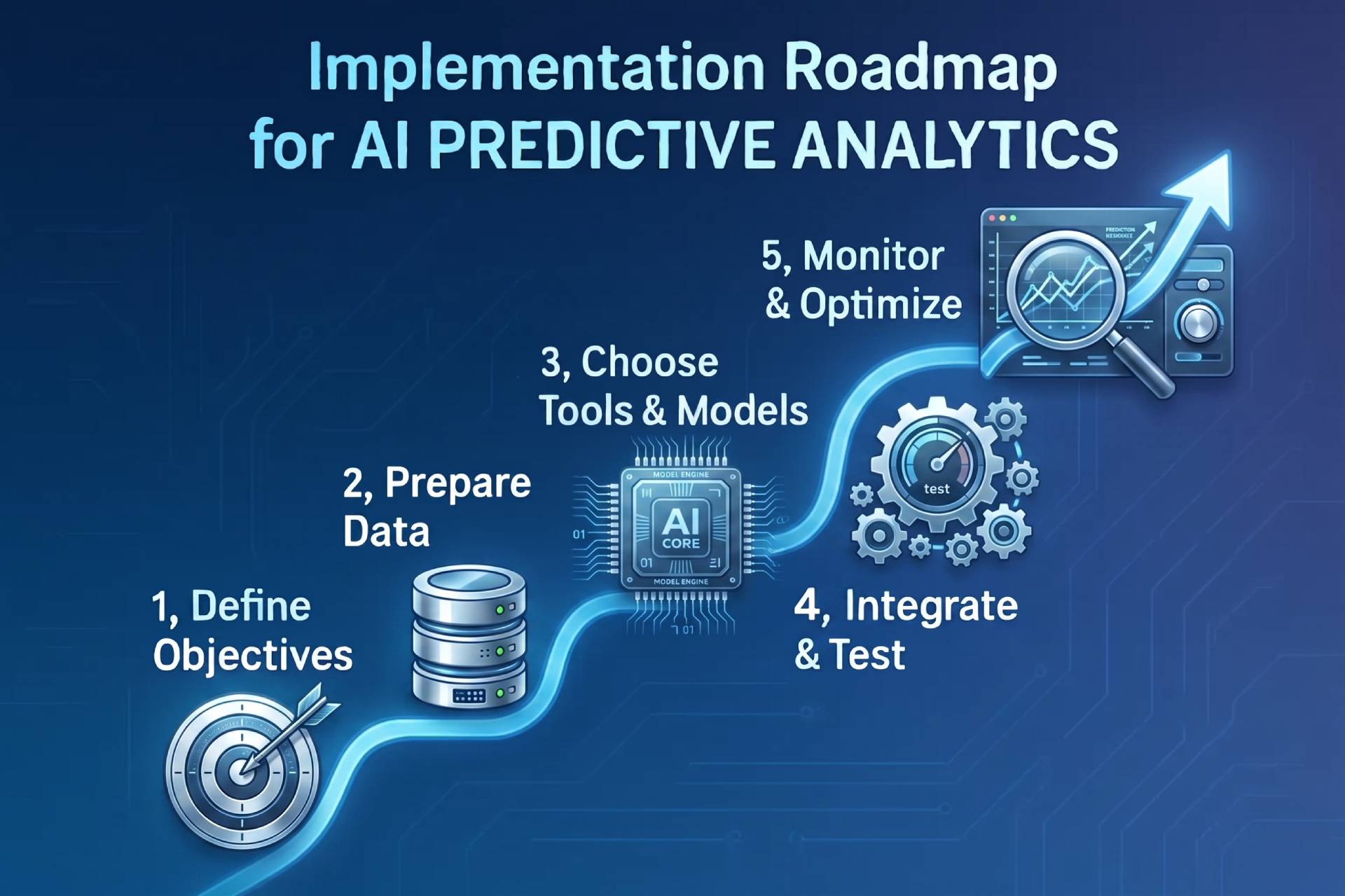
Success with predictive analytics requires a clear, actionable roadmap that pairs technical know-how with strategic planning.
Identifying Goals and Objectives
Start by setting specific goals. Outline KPIs tied to ROI and align them with your business strategy. Whether aiming to reduce churn or boost engagement, match your AI efforts to your organization’s highest priorities for maximum impact.
Integrating AI Solutions into Existing Systems
Effective implementation means connecting AI with your marketing tech stack, think CDPs, CRMs, and APIs. Modern cloud platforms provide the flexibility needed for smooth integration and scaling.
Evaluate your existing systems to eliminate gaps, making sure AI strengthens your operations rather than adding complexity.
Overcoming Common Challenges and Pitfalls
Watch out for data silos and inconsistent data sources; tackle these by consolidating and standardizing inputs. In parallel, always make sure your processes remain compliant with privacy laws and regulations.
Encourage team adoption with hands-on training and change management to smooth the path from old workflows to new, AI-enhanced processes.
Regularly review your AI’s outputs and refine them, keeping your strategies aligned and effective.
Key Benefits of AI Predictive Analytics for Marketing Teams
AI-powered predictive analytics brings huge benefits, from streamlining operations and boosting brand loyalty to anticipating market shifts and mitigating risks.
It helps spot trends before they’re obvious, letting you react with agility while competitors are still analyzing what already happened.
Businesses using predictive analytics enjoy increased accuracy and confidence in their marketing, leading to fewer costly errors and greater growth potential.
Improving Return on Investment and Marketing Efficiency
AI-driven models focus your budget on the highest-converting prospects, optimizing spend and maximizing ROI.
Predictive analytics exposes what works and what doesn’t, so you can double down on value and cut waste, a win for both your bottom line and creative freedom.
Providing Personalized Customer Experiences
Personalization now goes beyond surface-level touches like using a customer’s name. AI crafts tailored journeys and recommendations, delivering the right message at the ideal touchpoint.
This approach lifts engagement, deepens loyalty, and increases revenue by treating each customer as an individual.
For more, see how AI journey mapping can improve customer experience.
Enabling Data-Driven Decision Making
AI reduces uncertainty in your strategy by supporting decisions with real-time dashboards and actionable metrics. Teams pivot quickly and confidently, knowing every move is driven by accurate data rather than guesswork.
Best Practices for Leveraging AI Predictive Analytics

To squeeze the maximum value from AI, build robust data pipelines for real-time insights and make responsible, compliant AI practices the foundation.
Use AI as a partner, not just a tool, balancing its strengths with your campaign goals while prioritizing privacy and security.
Ensuring Data Quality and Governance
Accurate predictions depend on clean, well-governed data. Regularly clean and standardize datasets while maintaining GDPR and privacy compliance. Robust governance builds trust and ensures your analytics remain a competitive advantage.
Continuously Monitoring and Optimizing AI Models
Continuously monitor model performance, retrain with fresh data, and adapt to changes in customer behavior. Watch for anomalies and address model drift quickly to keep results sharp and relevant.
Fostering a Data-Driven Culture within Teams
Support your teams by cultivating curiosity and analytical skills, providing training, and encouraging open communication about AI’s role. Involving employees ensures smooth adoption, robust use of data, and shared success.
Conclusion
AI predictive analytics gives marketing teams a smarter way to plan, personalize, and optimize campaigns.
Instead of relying only on past performance, brands can use predictive insights to understand what customers are likely to need next, where budgets should be focused, and which actions are most likely to drive results.
The value lies in using AI with purpose. Clean data, clear goals, strong governance, and ongoing model refinement are what turn predictive tools into real business advantages. When these elements work together, marketing becomes less reactive and more strategic.
As AI continues to shape the future of marketing, the brands that adapt early will be better positioned to reduce wasted spend, improve customer experiences, and act before opportunities pass them by.
Predictive analytics helps brands anticipate what may happen next and build marketing strategies that respond with confidence.