
Content Distribution Framework for 2026
Karl Marais | 2 June 2026
Every business today is a content creator, with blogs, videos, podcasts, and more. Yet, creating content is just the beginning. If your content isn’t seen, it might as well not exist.
The key to business growth in 2026 is ensuring your content lands in front of the right people. A robust content distribution framework is no longer just a nice-to-have but the factor that separates thriving brands from those lost in the noise. Let’s explore how to achieve this.
Understanding Content Distribution Frameworks
Compelling content is step one. To make it count, you need a strong content distribution framework, which encompasses strategies like multi-channel distribution and effective content delivery to boost brand visibility.
A good framework aligns marketing operations and strategy, integrates the right digital tools, and prioritizes content promotion.
Whether you’re publishing blogs, videos, or podcasts, reaching your audience where they are is essential. These elements work in harmony to drive engagement and ensure your content fulfils business objectives.
A carefully built distribution framework is the difference between content that’s forgotten and content that sparks real conversations and results.
Defining Content Distribution for the Future
Content distribution is evolving. Success is less about clicks and more about discovery, users finding your content organically, often within platforms or feeds, in a zero-click world. Brands must embrace AI-driven search and algorithmic discovery.
Modern strategies leverage decentralized content that is not tied to one platform but is discoverable wherever the audience is. This creates brand-led discovery and broader reach, reflecting new audience behaviors and expectations.
Key Components of a Distribution Framework
Effective frameworks are built on:
- Audience research: know who you’re targeting.
- Channel selection: focus on the platforms your audience prefers.
- Content formats: adapt for each channel, from blogs to video snippets.
- Clear goals and editorial standards: keep efforts aligned.
- Measurement: track metrics and adjust based on KPI feedback.
Together, these pieces create a dynamic, responsive strategy that keeps your content seen and relevant.
Trends Shaping Content Distribution
Content distribution is changing fast. AI summarization is making content easier to consume by delivering concise versions of content, while evolving social feed algorithms increasingly favor modular and personalized experiences.
At the same time, voice search and AI-driven visibility are becoming more important, and the use of headless CMS platforms continues to grow as organizations seek seamless cross-platform content management.
Adopting these trends is key to ensuring content resonates and reaches your intended audience.
Learn more about creating personalized customer experiences here.
Importance of a Content Distribution Strategy
Even the best content gets lost without a smart distribution strategy. The right plan amplifies your reach, boosts brand awareness, and generates measurable ROI.
By effectively leveraging different channels, companies see higher engagement and traffic and establish long-term market leadership.
Why Businesses Must Plan Their Distribution
Solid distribution planning is vital for business growth. It ensures content is delivered to the right audience at the right time, driving reach, loyalty, and conversions.
Without a plan, even great content risks going unnoticed; targeted planning turns content into sales and engaged communities.
Benefits of a Structured Framework
Structured frameworks bring consistency, maximize resources, and deliver a steady stream of organic traffic.
They allow for data-driven adjustments, refining strategy as metrics evolve. This approach diversifies your reach and reduces risks, fueling sustained growth.
Common Pitfalls to Avoid
Common mistakes include relying on a single channel, ignoring SEO, failing to repurpose content, not tracking meaningful results, relying on vanity metrics, and copy-pasting content across platforms.
Avoiding these pitfalls helps keep your distribution efforts focused and effective.
Core Content Distribution Channels
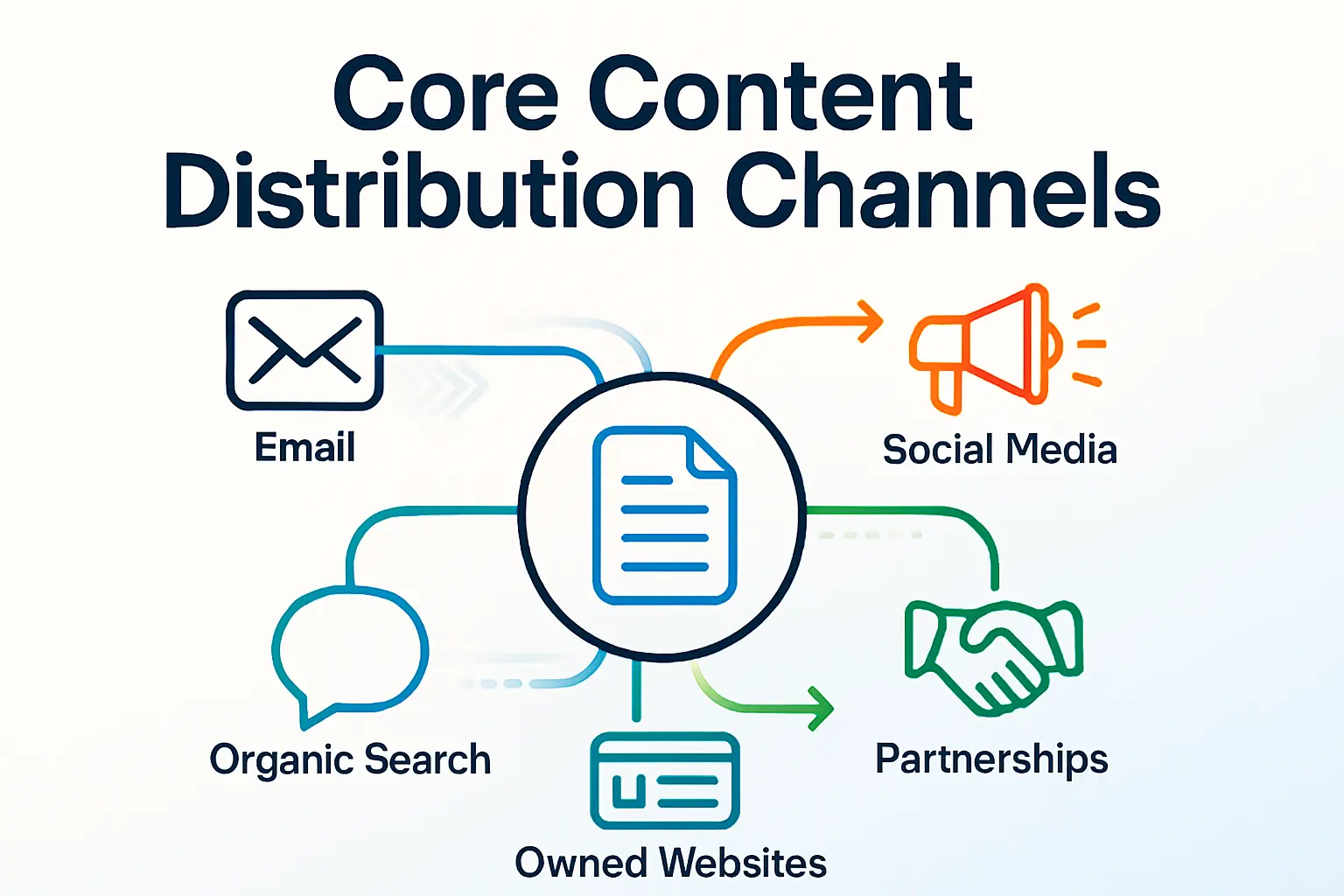
Content distribution channels are essential for getting your message in front of the right people. A balanced approach combines:
- Owned media: your website, blog, and social profiles, ensuring consistency and control.
- Earned and shared media: press coverage, user-generated content, and organic shares or backlinks add trust and exponential reach.
- Paid media: social ads and influencer partnerships, requiring smart budgeting for maximum impact.
A strategic mix lets your content thrive across platforms, capturing attention and fostering relationships.
Choosing the Right Channel Mix
A smart mix means mapping where your audience spends time, maybe LinkedIn for B2B, or Instagram for a younger crowd.
Blend owned, earned, and paid media to maximize engagement without overextending your team. Prioritize the highest-return channels and remember that flexibility is key as new trends emerge.
Optimizing Content for Distribution
Strong content requires optimization for multi-platform appeal. This means applying SEO best practices, adapting content to the requirements of different platforms, tracking analytics to guide improvements, and repurposing existing content into formats such as videos or infographics.
Consistent performance monitoring enables quick pivots and helps extend the lifespan of your content.
Tools and Platforms to Enhance Distribution

The right distribution tools are crucial. Options like Buffer, CoSchedule, and Hootsuite automate scheduling and streamline multi-channel publishing. Automation reduces manual effort, freeing up time for creative work and analytics.
For measurement, tools like Google Analytics and Semrush track what’s working, while UTM tracking and CRM systems offer clarity on audience engagement.
Platforms such as LinkedIn, Medium, and Substack enable a wide multi-channel reach, while syndication on Reddit or Quora broadens visibility even further.
Advanced Strategies for 2026 and Beyond
Future-ready brands are embracing AI and automation to refine content distribution. AI-driven tools predict the best times and platforms for publication and optimize repurposing with pinpoint accuracy.
Multi-channel and modular frameworks, like hub-and-spoke and headless CMSs, make sure each piece of content fits its platform and audience perfectly.
Preparedness for trends like zero-click searches, answer engine optimization, and “dark social” interactions is vital. Staying agile and proactively iterating on strategy guarantees ongoing relevance.
Frequently Asked Questions
How does content distribution differ from marketing?
Content marketing is about creating valuable material. Distribution ensures that content reaches the intended audience through the right channels.
Unlike promotion, which often focuses on immediate attention, distribution sustains awareness and nurtures relationships.
What are the key metrics for evaluating success?
Evaluate with metrics like engagement, conversions, leads, and brand awareness. Track website traffic, share velocity, and clicks to get a holistic view of what’s working.
How can businesses adapt to future content trends?
Stay agile. Optimize for AI search and voice queries, embrace automation, and repurpose high-performing content across channels. Continuously monitor audience behavior and test emerging platforms.
Conclusion
A future-proof content distribution framework is your brand’s ticket to thriving in a crowded digital world.
By combining the right mix of channels, optimizing content for each platform, tracking meaningful performance metrics, and adapting to emerging trends, businesses can extend their reach and get more value from every piece of content they create.
As audience behaviors and technologies continue to evolve, a flexible, data-driven approach to distribution will help ensure your content remains visible, relevant, and impactful. Make every piece of content count.