AI Inventory Automation for Leaner Operations
Karl Marais | 6 February 2026
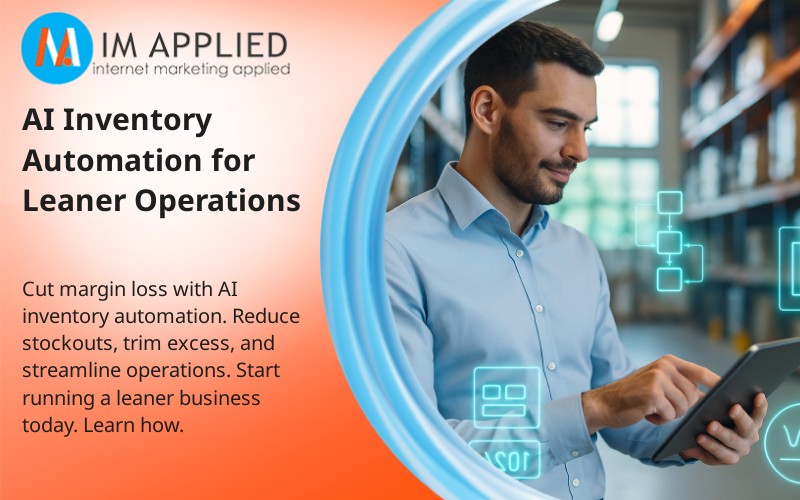
Starting to feel the squeeze on your margins? You’re not alone. Many business owners experience inventory bloat and unexpected stockouts. Throwing more money or manpower at the issue won’t fix it.
But what if you could reduce the guesswork and improve efficiency without expanding costs? In response to these pressures, AI automation offers a practical alternative. Many large companies are adopting it, and deployment is often simpler than expected.
Introduction to AI Inventory Automation
AI inventory automation is changing how many businesses manage their operations. Manual inventory processes are increasingly being supplemented by AI-driven systems.
By leveraging artificial intelligence, businesses can streamline inventory control and enhance supply chain management through automation.
AI-powered systems deliver accurate forecasting, trend identification, and outcome prediction, minimizing human error and making daily operations more efficient.
What is AI Inventory Automation?
Simply put, AI inventory automation is the application of advanced AI technology to inventory management. By pairing AI and machine learning, companies modernize and automate traditional stock control.
These intelligent systems leverage inventory tracking data and algorithm-driven analytics to optimize decisions, aligning supply with demand and enabling faster responses to market shifts.
Benefits of Using AI in Inventory Management
The advantages of AI inventory systems go far beyond cost reduction. Forecast accuracy typically improves, enabling businesses to anticipate customer demand and adjust stock accordingly.
Automated inventory systems reduce carrying costs, streamline operations, minimize overstocking and stockouts, and enhance overall business performance.
For deeper insights on leveraging AI for customer understanding, see this guide on customer needs.
Machine Learning Algorithms
Machine learning algorithms are central to AI inventory management. These sophisticated tools analyze historical data to uncover demand patterns, driving predictive models that optimize stock levels.
Machine learning enables businesses to process vast datasets, improve forecasts, and adapt quickly to new information or changing trends.
With AI-powered software, companies lower the risk of overstocking and understocking, reducing inefficiency. These technologies continuously learn and evolve, fine-tuning their predictions as more data is processed and markets shift. For more on predictive analytics and its impact, see this article.
Implementing AI for Leaner Operations
AI is increasingly valuable for firms seeking leaner operations and optimal resource use. AI inventory tools harness predictive analytics to manage and optimize inventory, supporting just-in-time (JIT) approaches and reducing unnecessary overhead.
An effective AI system analyzes sales data and market movements to improve overall agility. With well-planned implementation, businesses can quickly adapt to market changes, streamline their supply chain, and improve profitability.
In addition, AI helps drive sustainable practices by reducing the risk of overproduction, minimizing waste, and aligning inventory with real-world demand.
Steps to Automate Inventory Processes
The journey to automation starts with a clear plan. Begin by integrating your business’s data sources for accurate information flow. Next, configure the inventory management software to fit your specific requirements.
Pilot tests and run trials help to ensure the new system works within your workflows and identify any challenges. Invest in comprehensive employee training to maximize adoption.
Once proven, scale automation across operations gradually. This approach smooths the transition and improves productivity while keeping risks low.
Tools and Technologies Involved
Modern AI inventory management relies on a combination of advanced tools. Sophisticated inventory management software, supported by core AI platforms, brings advanced analytics to your logistics chain.
ERP and WMS systems can work together for data consistency, while barcode scanners and IoT sensors support automated inventory tracking and reduce errors.
Robotic Process Automation (RPA) takes on repetitive tasks, further boosting efficiency. Working alongside IoT solutions, RPA automates repetitive tasks, supporting greater efficiency.
Embracing these innovations can enable businesses to remain competitive.
Enhancing Efficiency with AI-Driven Inventory Management
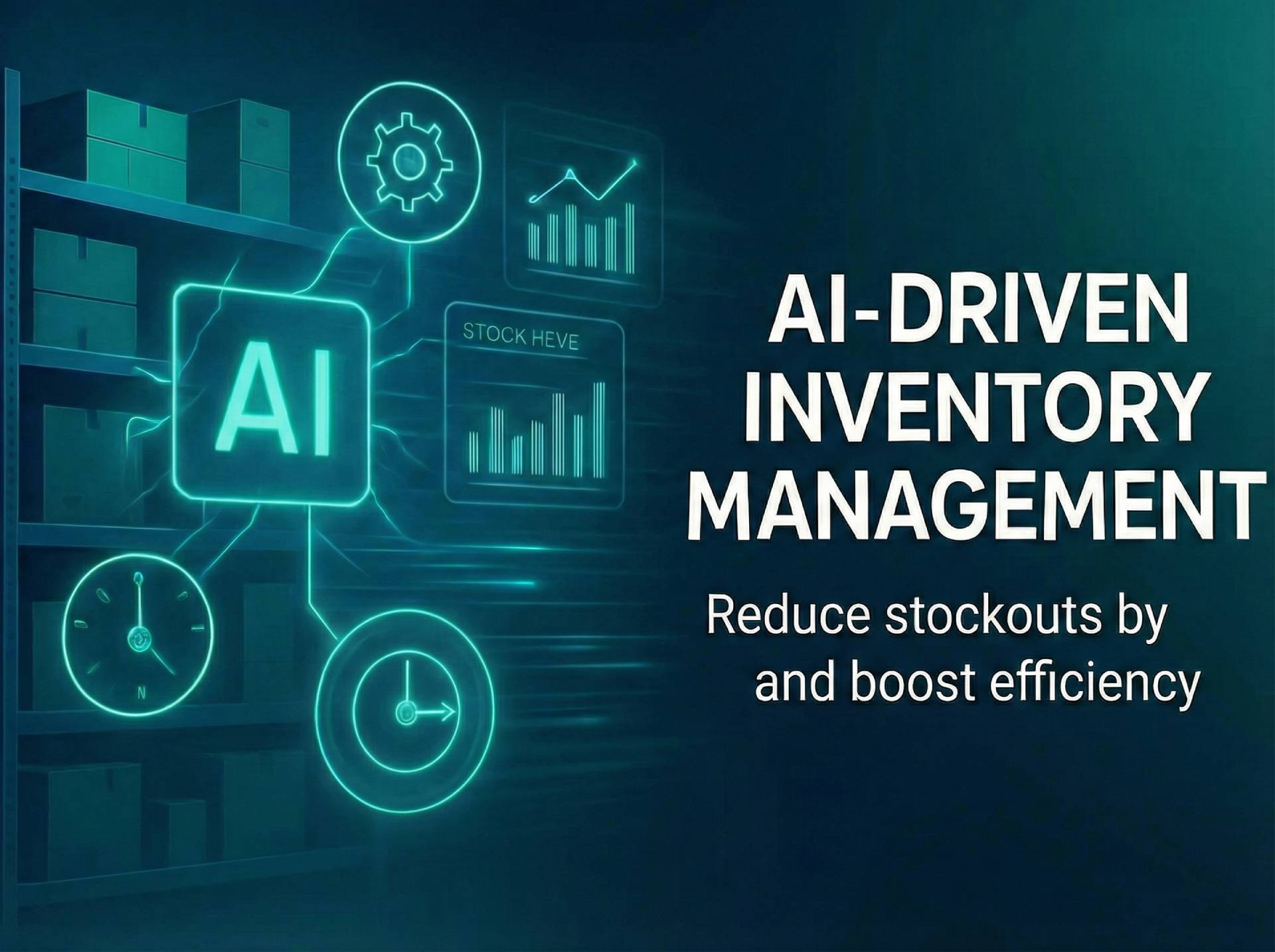 AI-driven inventory management offers companies the power to streamline inventory and minimize errors. With business intelligence and real-time data insights, organizations can guide buying and allocation decisions, reducing the risk of stockouts and overstocks, and ultimately improving ROI.
This creates a lean, responsive operation that meets market demands, an essential ingredient for staying ahead.
Reducing Stockouts and Overstock
AI addresses the persistent problems of stockouts and overstock. Traditional methods can struggle to predict demand accurately, particularly when market conditions change, leading to excess carrying costs and missed sales.
Predictive analytics, however, allow AI systems to fine-tune stock levels, maintain safety stock, and help align inventory with actual needs. This approach reduces costs and increases efficiency, achieving a balance between supply and demand.
Optimizing Supply Chain Operations
The integration of AI can profoundly optimize supply chain management. Businesses can gain better logistics visibility and stronger supplier coordination.
By analyzing large datasets, AI highlights actionable insights that streamline supply chain activities and improve reliability. This can result in greater agility and sustainable growth.
Real-world Applications and Use Cases
AI-driven inventory solutions are already reshaping parts of many industries such as retail, manufacturing, and healthcare.
From demand forecasts in e-commerce to material management in factories, real-world case studies show impressive results: cost savings, fewer errors, and smoother operations. These success stories make a powerful case for adopting AI-powered inventory systems.
Challenges and Solutions in AI Inventory Automation
Despite its potential, AI inventory automation isn’t without obstacles. Key challenges include system integration and data issues. Incorporating AI into existing infrastructure may expose data silos or poor data quality, both of which must be addressed for success.
To overcome these hurdles, a phased, strategic approach works best. Conduct a thorough assessment of your technological and human resources, identify skill gaps, and focus on gradual integration.
Implement effective training and strong leadership to prepare your team and to help the transition be both smooth and productive.
Future Trends in AI Inventory Management

The future of inventory management is being shaped by rapid advancements in AI. Smart warehouses, real-time predictive tools, and adaptable systems are making AI-driven inventory management increasingly valuable.
Businesses adopting these technologies reduce inefficiencies and can strengthen their competitive edge.
Emerging Technologies to Watch
Technologies such as generative AI, digital twins, and hyperautomation are transforming stock management through advanced predictive capabilities, real-time tracking, and efficient automation. Organizations that leverage these breakthroughs gain strategic advantages in their fields.
The Growing Role of IoT and Robotics
IoT devices like smart shelves, sensors, and connected logistics provide real-time visibility. Robotics, including Autonomous Mobile Robots (AMRs), accelerates order handling and reduces manual labor. Together, IoT and robotics help build an integrated, efficient, and highly responsive supply chain.
Conclusion: The Path Forward for AI in Inventory
AI’s central role in inventory management will only grow in the coming years. By adopting AI, companies create a foundation for continuous improvement by reducing costs, avoiding waste, and gaining a strategic edge.
Develop a clear AI inventory strategy. Focus on strategic planning, scalability, and workforce readiness so that your operations remain adaptable and resilient.
Embrace a mindset of continual learning and adaptation, a necessity as new AI solutions emerge.
For more on choosing the right AI tools for your goals, check out this strategic guide. By preparing today, you’ll position your business to thrive in tomorrow’s competitive landscape.