
High-Intent Digital Marketing Strategies for Small Service Brands
Karl Marais | 2 December 2025
Small service brands constantly face the challenge of attracting quality customers ready to buy. Broad, outdated marketing tactics waste time and budget, leading to frustratingly low conversion rates.
But what if you could focus your marketing on customers searching for precisely what you offer? The path to sustainable growth isn’t more marketing, it’s more innovative marketing, targeting high-intent customers at the precise moment they need your service.
Understanding High-Intent Digital Marketing
High-intent digital marketing centres on reaching customers who are actively seeking specific services, customers with genuine interest and purchase intent. For small service brands, this approach minimises wasted spend, increasing efficiency and improving conversion rates.
Rather than casting a wide net, high-intent marketing prioritises prospects closer to making a decision. Integrating commercial intent keywords into your campaigns ensures you address user needs at the crucial moments of their buying journey. By focusing your digital strategy around high-intent signals, you’ll generate higher-quality leads and see more substantial returns on your marketing effort.
To succeed, brands must balance informative content with clear calls to action to guide customers from consideration to conversion. This targeted approach not only fuels growth but also builds a sustainable customer-acquisition model.
What Makes a Query High-Intent?
High-intent queries include keywords that signal a readiness to buy, think “book a window cleaning” rather than “window cleaning tips.” Recognising these distinctions helps brands fine-tune their messaging and offers to match immediate customer motivations.
Monitoring user behaviour and urgency-laden keywords enables you to structure your SEO to best align with high-intent prospects, further enhancing your ability to move users down the funnel.
Why This Matters for Small Service Brands
For small businesses with limited marketing budgets, wasted spend is especially damaging. High-intent strategies deliver better leads at lower acquisition costs, granting local brands an edge where it matters most.
Targeting local, high-intent users means you’re connecting with prospects poised to convert, exactly what small service brands need for sustainable growth. By understanding customer search habits and motivations, you can personalise your outreach and stand out in your community.
Connecting with Local High-Intent Customers
Local marketing is vital: attracting nearby customers actively looking for your services is the fastest route to growth. Prioritise local SEO techniques to ensure you show up when it matters most, such as appearing for “plumber near me” searches within your service radius.
Build local relevance by engaging your audience through Google Business Profile, local content, and community involvement. Collaborate with other trusted local businesses to enhance your outreach and reputation.
Winning with Local SEO
Claim and optimise your Google Business Profile, your most visible local digital asset. Research local keywords and weave them into your website and business listings. Maintain consistent NAP (name, address, phone) data across all platforms to build credibility with both search engines and customers.
Reviews matter. Encourage satisfied customers to leave feedback to boost both search visibility and trust. Regularly monitor and respond to reviews to show your commitment to service.
Embrace Google Maps marketing; appearing on Maps when users search for local services often leads directly to conversions.
Optimising for “Near Me” and Mobile Searches
“Near me” searches, especially on mobile, continue to rise. Optimise for geo-targeted and conversational keywords, and ensure your website delivers a great mobile experience. Emphasise fast load times, clear navigation, and easy contact options.
Implement voice search optimisation, write in the natural language users employ with virtual assistants. This keeps your business relevant as consumer habits shift.
Strategic Local Partnerships
Build relationships with complementary local businesses. Co-marketing initiatives, referrals, or event sponsorships can introduce you to customers already engaged within your community. These alliances extend your reach, multiply your referrals, and reinforce your credibility.
Key Digital Marketing Strategies for Small Service Brands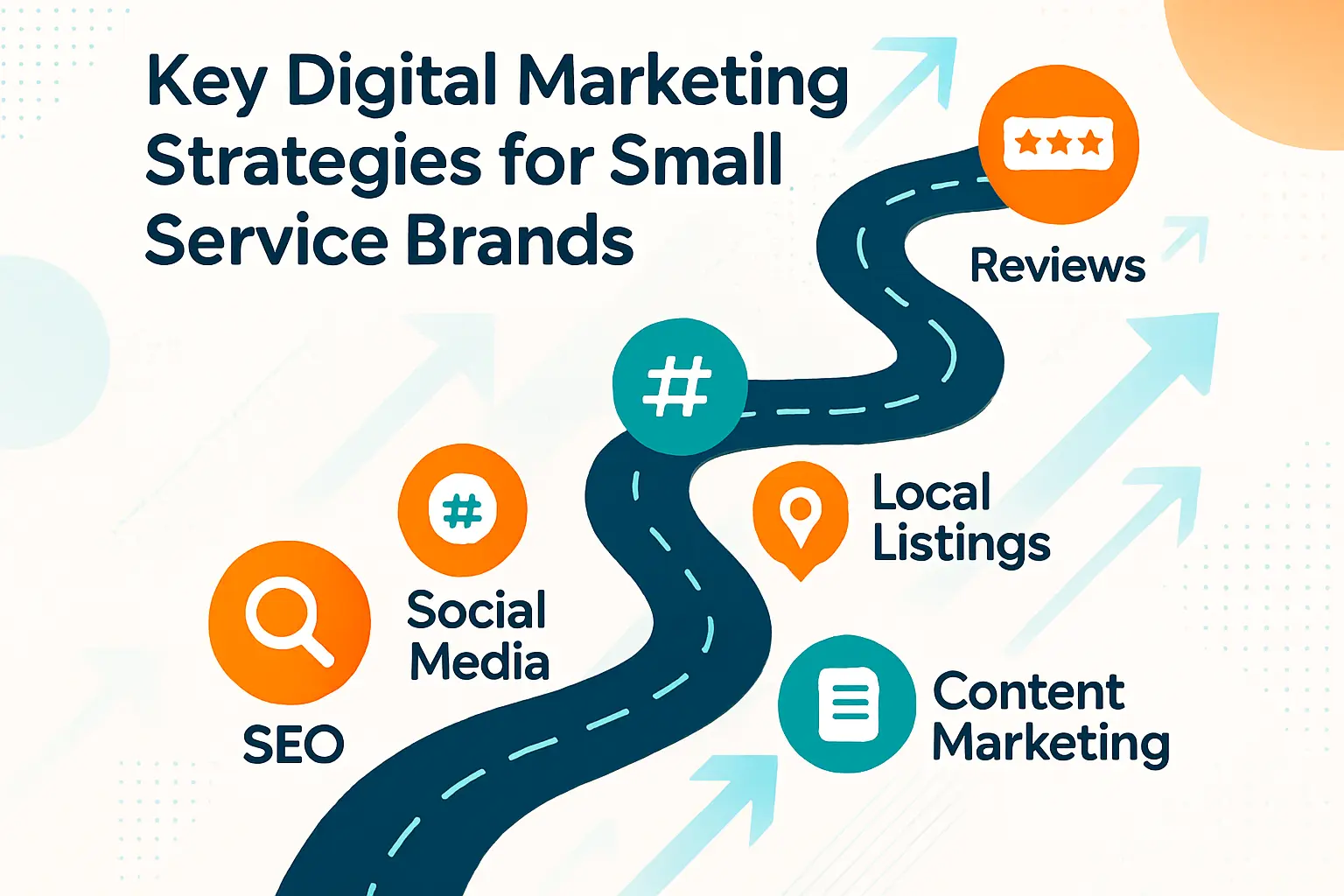
Small service brands thrive with a focused, integrated marketing mix. Here’s how to get results, even with modest resources:
Content Marketing with Local Relevance
Effective content builds authority and trust. Focus on answering real questions from your target audience. Share case studies, practical guides, and testimonials relevant to your local market. Update your website with service pages tailored to your geographic area and specialities.
Optimise your content with geo-specific keywords and personalise your messaging for your local community. Continuously review content performance to stay responsive to your audience’s needs.
Social Media Engagement
Leverage platforms like Facebook and Instagram to build local connections. Community management, responding promptly to messages and comments, builds trust. Employ geo-tagging, share partnerships and local stories, and use targeted social ads to boost visibility within your area.
Email Marketing for Nurturing and Retention
Email marketing remains cost-effective and direct. Segment your list for personalised outreach and automate follow-ups using drip campaigns. Share service updates, offers, and helpful tips to keep your brand top of mind and nurture leads into loyal customers.
PPC for Instant Local Visibility
PPC advertising, such as Google Ads, could eventually deliver immediate results. Use local geo-targeting and bid on high-intent, location-based keywords. Pair ads with optimised landing pages to increase conversion rates, and monitor performance data to refine your campaigns for maximum ROI.
Enhancing User Experience for High-Intent Leads
A seamless website experience is essential. Invest in clear navigation, persuasive calls to action, and straightforward lead capture forms. Fast load times and a clean, professional layout keep prospects engaged.
Prioritising Mobile-First Design
Most local searches are mobile. Ensure your site is fully responsive, with content that displays beautifully and functions smoothly on all screens. Optimise for touch navigation and monitor mobile site speed using Core Web Vitals.
Simplifying the Customer Journey
Guide users from search to conversion with minimal friction. Map and refine each touchpoint in the customer journey, matching messaging and CTAs to their intent at each stage. Align your SEO, content, and user experience strategies to move visitors efficiently toward action.
Staying Ahead: Trends & Tools for Small Brands

Adopt the latest marketing technology to stay competitive. Tools for data analysis, automation, and personalisation increase targeting precision and marketing ROI. Keep an eye on trends like voice search, video content, and AI-driven strategies to innovate as consumer behaviour evolves. Regularly update your marketing stack and refine your approach for continuous improvement.
Common Pitfalls and Myths in Digital Marketing
Avoid broad targeting, neglect of data, and inconsistent branding. Define your ideal customer, invest in analytics, and deliver unified messaging across platforms. Don’t overlook SEO, or assume that simply creating something will automatically attract an audience; active optimisation and engagement are continuous processes.
Quality trumps quantity. Focus on attracting and converting the right traffic, rather than simply amassing numbers.
Future Trends and Best Practices
Stay alert to trends like voice search, AR experiences, and privacy-focused marketing. Test and refine your strategies regularly, and invest in agile, data-driven decision-making. Blend innovation with proven techniques to keep your marketing sharp as the digital landscape evolves.
Conclusion: Take Action for Smarter Service Marketing
Digital marketing success for small service brands hinges on reaching high-intent customers, localising efforts, optimising user experience, and adopting the right tools.
Key takeaways:
- Focus relentlessly on high-intent, ready-to-book customers
- Prioritise local SEO and content tailored to your community
- Enhance website UX—especially for mobile users
- Stay agile and data-driven with your digital marketing initiatives
Next steps: Define clear goals, pinpoint your audience, select the most effective channels, budget wisely, and measure results to adjust your tactics. With a smart, high-intent digital strategy, you’ll find new customers, build lasting loyalty, and secure your place in a competitive local market.
For further reading, see SEO for Small Businesses and explore more resources to keep your strategies current.